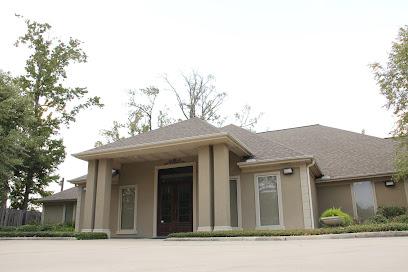


Weaver-Jaynes DDS was founded in 1979 by Dr. Richard Weaver. Right from the start our mission was to provide the highest level of dental care to patients within the Golden Triangle area of Texas. Today, over 35 years later, we are proud to be continuing that tradition, making a difference in our patients lives one smile at a time.
Weaver-Jaynes DDS is a collaboration of three highly experienced, dedicated dentists who are committed to improving the quality of life for their patients. In addition to our three dentists Weaver-Jaynes DDS has a caring, motivated office staff who put patient well being first. What follows is a brief bio for our three dentists, for more comprehensive information please check out Our Dentists page.
Richard Weaver, DDS A native of Beaumont, TX, Dr Weaver received his dental degree from the University of Texas Dental School in San Antonio in 1979. Shortly after he founded Weaver-Jaynes DDS. Since that time he has spent the last 35 years practicing dentistry in Beaumont.
Kim Arguelles, DDS Dr. Kim, as she is commonly called by patients, grew up in Brownsville, TX and received her dental degree in 2008 from the University of Texas Health Science Center in Houston. She joined our team in 2009 and in 2010 she and Dr. Jaynes wed.
Brian Jaynes, DDS Dr. Jaynes earned his dental degree in 2009 from the University of Texas Health Science Center in Houston. Shortly thereafter he joined our team and in 2010 he and Dr. Kim were married. Dr. Jaynes is committed to improving the quality of life for patients.
We dedicate ourselves to excellence in modern dentistry, striving to create a warm and comfortable environment for our patients and ourselves. Through these efforts we enrich our patients lives and, in turn, they enrich ours.
As part of our mission to embrace the latest techniques in modern dentistry, improve patient quality of life, and make all patients feel comfortable and at ease we offer a full range of comprehensive dental services. Those services include the following:
Dr. Richard Weaver was born and raised in Beaumont, TX. He graduated from Forest Park High School before attending Lamar University where he received a Bachelor of Science in Biology. After receiving his dental degree from the University of Texas Dental School in San Antonio in 1979, Dr. Weaver returned to Beaumont where he has practiced dentistry for the past 30 years.
Dr. Kim, as our patients like to call her, grew up in Brownsville, TX and became a licensed dental assistant upon graduating from South Texas High School for Health Professions. She worked as a dental assistant while attending the University of Texas and it was at that time that she realized her love for dentistry. She continued her trek toward Southeast Texas with a stop at the University of Texas Health Science Center in Houston where she met Dr. Jaynes. Since receiving her dental degree in 2008, she and Dr. Jaynes married in January 2010. They joined our team in the summer of 2009 and were proud to have them.
Dr. Kim is fluent in Spanish and really enjoys seeing children. Her passion for intricate cosmetic cases has driven her toward continuous postgraduate studies covering the use of cutting-edge technology and techniques. She also enjoys traveling, shopping, and the occasional fishing trip with Dr. Jaynes.
A graduate of Louisiana State University in Baton Rouge and the University of Texas Health Science Center in Houston, Dr. Brian Jaynes earned his degree in dentistry in 2009. Being an avid sports and outdoorsman, there was never a question in my mind as to where I wanted to practice dentistry. Its great to be back home in Southeast Texas.
Dr. Brian Jaynes is a member of the Southeast Texas Dental Society, the Texas Dental Association, the American Dental Association, and the Delta Upsilon Chapter of the Psi Omega Dental Fraternity. His easygoing demeanor and passion for dentistry puts people from all walks of life at ease while they are discussing or undergoing treatment.
Dentistry in its most rudimentary form has been practiced for thousands of years, with evidence showing that the Ancient Egyptians had an early form of dentistry. In those many centuries since, and particularly in modern times, dentistry has advanced in leaps and bounds. Today it is both extremely effective and relatively pain free. However, despite these advances in treatment, dental anxiety is still very pervasive. Fortunately, there is a solution: sedation dentistry.
As the name implies sedation dentistry is the practice of dentistry that utilizes sedatives to help patients relax. It is sometimes also referred to as sleep dentistry; however, that is not entirely accurate in a literal sense because the patient is usually conscious and awake during treatment. Instead the patient enters a relaxed, sedated state without typically falling asleep. However, it is common for the patient to have difficulty recalling the events of the procedure while under sedation. The level of sedation may vary depending on different circumstances, such as the sedation method and quantity of sedative used, the goals and objectives of the procedure, and other individual factors.
Sedation dentistry utilizes an array of different types of sedatives and different methods for administering them. In all cases great care is given to ensure that both the particular type of sedative and the amount administered are completely safe. Methods include:
Just about anyone with significant dental anxiety can benefit from sedation dentistry. However, it is particularly helpful for patients with very severe anxiety. Sedation dentistry also benefits children, people with special needs, or patients who suffer from muscle control issues. That is because it helps the patient remain still and thus reduces the risk of injury while also allowing the dentist to perform more efficient, higher quality work.
The dentists and staff at Weaver-Jaynes DDS are committed to improving the quality of life for our patients and to helping them feel comfortable and relaxed during procedures. We are excited to offer high quality, safe, effective sedation dentistry options. We encourage any patient who might benefit to inquire about these services.
A study by the National Institutes of Health found in their most recent survey for the time period of 1999-2004 that 92% of adults between the ages of 20 and 64 have had at least one cavity. This means that odds are you will experience a cavity at some point in your adult life and will thus need to get a dental filling. What follows is key information you need to know about dental fillings in order to make an informed decision.
Dental fillings may also be referred to as dental restorations. Fillings consist of a filling material that is placed in a dental cavity to protect the tooth from further damage and decay and to restore dental function. Some cavities cause pain but some do not. In the case of painful cavities the dental filling will also alleviate the pain.
Cavities are often referred to as dental caries in dental and scientific literature. Dental caries are bacterial infections which cause a demineralization of tooth enamel, thereby resulting in a structural cavity and giving rise to the popular term cavity. In simplest terms fillings literally fill the cavities caused by caries.
In todays age of modern dentistry patients are fortunate to have a number of choices available when it comes to selecting the material used for their dental fillings. There are pros and cons to each type of material, which well discuss below. When selecting the most suitable material for your situation it is important to consider factors such as cost, durability, length of time the procedure will take, your overall health, allergies, the location of the filling, and any recommendations from your dentist.
A dental amalgam is an amalgamation (mixture) of two or more types of metal. Mercury is always a component metal and usually comprises between 43% and 53% of the total mixture. Other metals used typically consist of one or more of the following: silver, tin, and copper. Dental amalgams will appear silver in color. They are the oldest type of dental filling and have been in use for over 150 years.
Composite resins are a mixture of acrylic resins and tiny, powdered glass-like particles. They are usually self hardening but may also be hardened under a special blue light. They are tooth colored and typically look very realistic. Their color can be customized to best match existing teeth in shade and tone.
Glass ionomers are mixtures that consist of acrylic acids and glass powders. Due to their relative fragility they are primarily used for small fillings that are not subject to chewing pressure. Glass ionomers are also used in the application of dental crowns to cement the crown. Glass ionomers are tooth colored.
Resin ionomers are similar to glass ionomers in that they are formed from acrylic acids and glass powders. However, they also consist of acrylic resins with lend them somewhat more strength and durability than glass ionomers.
Gold alloys are metal alloys that consist of gold and one or more other metals, often copper. This results in a gold-colored filling that is very strong, durable, and resistant to tarnishing and discoloration. Unlike metal amalgams, composite resins, glass ionomers, and resin ionomers, gold alloy fillings are an indirect restoration type. This means that they will take at least two dental visits to be placed, one to take impressions and one to fit them.
Porcelain ceramics have a number of dental applications including as a material in dental fillings. They may also be used in dental crowns, inlays, onlays, or for porcelain veneers. They are tooth colored with great translucency and they look very realistic, thus making them popular for many cosmetic dental procedures.
When choosing a dental filling it is important to discuss things carefully with your dentist. Your dentist will be able to make recommendations based on your tooth decay, medical history, sensitivity to allergens, financial and time constraints, and other conditions unique to your situation. Your dentist will also be able to advise you on what to expect both during the procedure and after the filling is in place. At Weaver-Jaynes DDS we are always happy and eager to discuss our patients oral health and to answer any questions our patients may have about dental fillings.