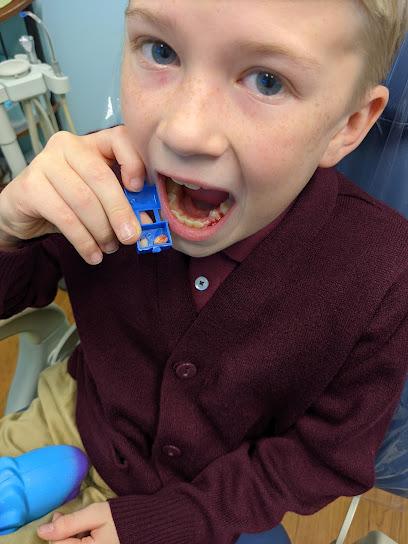


Vibrant Smile Dentistry is a cosmetic and general dental practice in Norfolk, Virginia. Led by Monleudy Bracken, DDS, the team at Vibrant Smile Dentistry proudly serves people of all ages in an energetic, caring environment.
Technology and compassion come together at Vibrant Smile Dentistry. From cosmetic treatments to restorations, the team employs the latest in dental innovation and the best in personalized care. They treat a range of common dental issues and are proud to provide emergency dentistry for the community.
iTero imaging delivers precise 3D imagery for Invisalign and dental restorations like crowns and implants. A suite of cosmetic services, including teeth whitening and Bioclear bonding, treat common imperfections to boost confidence and make everyday moments more special.
There are a few different ideas swirling around out there about how frequently you actually need to visit the dentist. Most people need to visit their dentist for a regular hygiene visit twice a year, or once every six months. There are exceptions to this rule, however. If you have gum disease, or a history of gum disease, your dentist may recommend more frequent visits. Another reason you may need to see the dentist more frequently is if you are undergoing orthodontic treatment. The bottom line is thatyou need to at least see the dentist twice a yearand you need to comply if it is recommended that you make those visits more frequent.
Dental x-rays are very safe. The amount of radiation that a dental x-ray produces is about the same as you would receive from a cross country airplane ride. Radiation is measured in millirems and one dental x-ray has only .5 millirems.
Everyone knows that cavities are bad, but a surprising amount of people dont know exactly what cavities are. A cavity is simply a small hole in the tooth that develops as a result of tooth decay. In other words, decay eats away at the tooth and results in a void space that disrupts the structure of the tooth. Its important to get cavities repaired because they will continue to grow larger with time.
A common misconception is that dental restorations last forever but unfortunately this is rarely true. With time dental restorations may break down or become loose, allowing decay to enter the area around the restoration and become problematic. Although you cant expect your fillings, bridges, and crowns to last forever, you can do your part to make them last as long as possible. Maintain great oral hygiene and visit your dentist regularly to keep those restorations in great condition for as long as possible.
Patients ask us about whitening their teeth all the time. Its a tough question because there is no universal answer that applies for everyone. The fastest and most effective way to whiten teeth is typically an in-office professional whitening procedure. However, depending how dramatic you need your results to be, you may not require this type of procedure. Our best advice is to speak with your dentist or dental hygienist aboutwhat type of teeth whitening they would recommend. The best results are always going to be a result of a professional treatment, but your dentist can help you determine which treatment is right for you.
Tooth decay often does not hurt until it gets close to the nerve of the tooth. It is not uncommon to see a patient with a huge cavity who has never felt a thing. The dentist can usually detect a cavity 3-4 years before it develops any symptoms. This early detection can help you prevent root canal treatment.
Flossing reduces the number of bacteria in your mouth. There are millions of these microscopic creatures feeding on food particles left on your teeth. These bacteria live in plaque which can be removed by flossing. Brushing your teeth gets rid of some of the bacteria in your mouth. Flossing gets rid of the bacteria the toothbrush cant get to. Thats the bacteria hiding in the tiny spaces between your teeth. If you do not floss, you allow plaque to remain between your teeth. Eventually it hardens into tartar. Plaque can be removed by brushing. Only the dentist can remove tartar.
Make it fun! If you are enthusiastic about brushing your teeth, your children will also be enthusiastic. Children want to do the things their parents do. If your children see you brushing your teeth and displaying good dental habits, they will follow. Ask the dentist for other creative ways to get children to brush their teeth.
Always spend two to three minutes brushing your teeth. It takes that long to get rid of the bacteria that destroy tooth enamel. Do not brush too hard. It takes very little pressure to remove bacteria and plaque. Floss at least once a day. Flossing is the only way to get bacteria from between your teeth.
Watch the sugar you eat. There is sugar in candy, fruits, crackers and chips. These are the foods that the bacteria in your mouth like best. Be mindful of foods like raisins and peanut butter that stick to your teeth. They can provide a constant supply for the bacteria eating into your teeth. Try to minimize the times during the day when sweet items are eaten and brush your teeth afterwards.
If you cannot brush after a meal, rinse your mouth with water which can help to remove food from your teeth. Chewing sugarless gum after a meal can also help. Chewing deskulates the flow of your saliva which acts as a natural plaque-fighting substance. And do not forget your regular dental visits. Good dental habits will go a long way toward a no-cavity visit.
Finding and treating dental problems at an early stage can save time, money and often unnecessary discomfort. X-rays can detect damage to oral structures not visible during a regular exam. If you have a hidden tumor, X-rays may even help save your life. Dentist will evaluate your need for X-rays based on the conditions present in development. There are many benefits to having X-rays taken. Any additional questions or concerns should be discussed with your dentist.
Fluoride is a mineral that occurs naturally in many foods and in water. Some natural sources of fluoride are brewed tea, canned fish, cooked kale and spinach, apples, and skim milk. Some city water contains fluoride, so by drinking tap water you will acquire fluoride. If drinking water does not have fluoride, supplements are available.
The lack of exposure to fluoride places individuals of any age at risk for dental decay. Fluoride is important to dental health because it helps prevent tooth decay by making your tooth enamel more resistant to acid attacks from plaque bacteria in your mouth.
Studies have shown that children who consumed fluoridated water from birth had less dental decay. Fluoride can reverse early decay and help prevent osteoporosis, a disease that causes degenerative bone loss. Talk to your dentist or dental hygienist about whether youre getting the daily amount of fluoride you need.
The American Dental Association cites sealants as an effective weapon in the arsenal against tooth decay. Sealants are a thin coating painted on chewing surfaces of molars and premolars. Dental sealants act as a barrier, protecting your teeth against decay-causing bacteria.
Sealants have proven effective with both adults and children, but are most commonly used with children. Despite the fact that sealants are about half the cost of fillings, only a small percentage of school-aged children have sealants on their permanent teeth. Ask your dentist whether sealants are a good choice for you or your children.
The American Dental Association recognizes that piercing is a widely accepted form of self-expression, and that includes piercings in the mouth. However, the potential problems from piercings are numerous. Some symptoms after a piercing include pain, swelling, infection, drooling, taste loss, scarring, chipped teeth, tooth loss, and an increased flow of saliva, none of which are particularly pleasant. Tongue piercing can also cause excessive bleeding. If youre thinking of placing a piercing in or around your mouth, talk to your dentist first. If you already have piercings and are having problems, see your dentist right away.
When you are asleep, production in your mouth decreases. Since your saliva is the mouths natural mouthwash, most people experience morning breath. Bacteria found on teeth in the crevices and on the taste buds of the tongue, break down the food particles, which produce sulfur compounds. It is actually these sulfur compounds which give our breath a bad odor. During desk, your saliva helps to wash away bacteria and food particles. Your saliva also helps to dissolve the foul smelling sulfur compounds.
Sensitivity toothpaste, which contains strontium chloride or potassium nitrate are very effective in treating sensitive teeth. After a few weeks of use, you may notice a decrease in sensitivity. Highly acidic foods such as oranges, grapefruits and lemons, as well as tea and soda can increase tooth sensitivity, and work against sensitivity toothpaste. If you do not get relief by brushing gently and using desensitizing toothpaste, see your dentist. There are special compounds that can be applied in-office to the roots of your tooth to reduce if not eliminate the sensitivity. High-fluoride containing home care products can also be recommended to help reduce tooth sensitivity.
Periodontal disease is inflammation and infection of the gums and supporting bone structure, which if left untreated, can cause permanent jaw bone destruction and possible tooth loss. Untreated periodontal disease has been linked to increased risk for conditions such as heart disease, stroke, low birth weight babies, pre-term delivery, respiratory disease, and prostate cancer. An advanced stage of periodontal disease exhibits inflamed gums pulling away from your bone and teeth. Other signs of periodontal disease include:
Treatment of early periodontal disease can be performed in-office. However, advanced stages may require surgery. Periodontal disease can be prevented and treated successfully by seeing your dentist and dental hygienist regularly and following recommended care plans.
Like other investments, if you whiten your teeth, the length of time you can expect it to last will vary. If you smoke, drink red wine or coffee, or consume other acid-containing foods, your bright smile may begin to yellow more quickly than you expect. In general, a teeth whitening procedure can last up to a few years. And even though the results can fade, occasional touch-ups can be done to regain luster.


