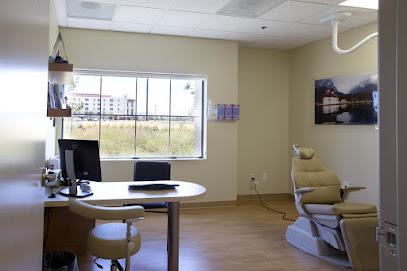


As Riverside Countys premier oral surgeon, Dr. Dmitry Tsvetov provides the area with an array of oral surgery services. From teeth extractions to dental implants Dr. Tsvetov does everything he can to provide patients with a pleasant, relaxing, and comfortable experience. Rather than just use a single treatment plan for every person that walks in the door, he takes the time to thoroughly examine each patient, talk through their issues, and find out what their goals are. Then, he will craft an individualized plan of care based solely on that patients needs and expectations.
While Dr. Tsvetov was born in Ukraine, he spent most of his childhood growing up in Fremont, California. After graduating high school, he decided to attend UCLA, which he graduated from in 1996 with a bachelors degree in biochemistry. With goals of being an oral surgeon in mind, however, his education was far from over.
He pursued his graduate studies at the Columbia University School of Dentistry, where he excelled greatly. During his tenure there, he earned the Health Professions Scholarship from the U.S. Army, which provides full tuition for superior students who then repay the debt by working for a branch of the military after they graduate. Dr. Tsvetov used this opportunity to complete his DDS degree in 2001.
From here, Dr. Tsvetov began an oral surgery residency training program at the University of Texas, Southwestern Medical Center/Parkland Memorial Hospital in Dallas. This oral and maxillofacial surgery program gave him greater insight into oral surgical practices, complications, aftercare, and much more. During this time, he observed and participated in numerous procedures until he became a master of the craft. This period also assisted him in pursuing his medical interests, as he was also able to complete a general surgery internship. In 2004, Dr. Tsvetov earned a medical degree from the University of Texas Southwestern Medical School, and in 2007, he completed his residency.
Dr. Tsvetov then joined the U.S. Army Dental Corps, where he served as a major. He was stationed in Heidelberg, Germany, and was given the responsibility of being the Officer in Charge of the Heidelberg Health Center Dental Clinic and the Chief of the Oral Surgery Department. These positions gain him further experience in the field of oral surgery, helping to form him into the premier Riverside County oral surgeon he is today.
After completing his service, Dr. Tsvetov received an honorable discharge and returned home to the United States. He decided to begin his private practice journey in Massachusetts, where he maintained an office for two years. However, the allure of his home state of California was too strong, so he decided to return home to could serve the residents of Riverside County and the surrounding areas.
With such a prolific start to his career, it should come as no surprise that Dr. Tsvetov is an active and respected member of the oral surgeon community. Throughout his career, hes been an active speaker and participant of many different dental conferences across the country, sharing his ideas and strategies in the field of oral surgery.
Dr. Tsvetov proudly received many military awards during his time in the service, including the Army Commendation Medal. This award is bestowed only on those who show meritorious service, meaning that Dr. Tsvetov truly went above and beyond his duties.
In addition to these awards, Dr. Tsvetov is also a Fellow of the American Association of Oral and Maxillofacial Surgeons, which is the premier organization for oral surgeons in the United States. He is also a diplomate of the American Board of Oral and Maxillofacial Surgery, another top-notch organization that requires stringent exam and maintenance requirements for membership.
While Dr. Tsvetov always puts his patients first, he still has a life outside of his Riverside County office. Hes married and has two daughters that he loves caring for. When hes not enjoying family time or working at the office, his favorite hobbies include exercising, skiing, and traveling.
All-on-4 dental implants or teeth in a day is an innovative procedure which can be a permanent, cost-effective solution for patients with missing teeth in the upper arch, lower arch or both arches. During the first stage of the procedure, failing teeth are removed, implants are placed and a provisional prosthesis is attached to them.
In the second stage, after the implants have healed, a fixed permanent prosthesis is attached to them. Find out what questions to ask your doctor in terms of computer guidance, detailed procedure cost breakdown, anesthesia fees and options, overall comfort and recovery process, implant brands and patient satisfaction guarantees.
All-on-4 dental implants enable your doctor to place 4 or more dental implants per arch. In stage two of the procedure, after the implants have healed, a permanent fixed dental bridge will be attached to them.
All-on-4 dental implants give patients like-natural results aesthetically and enable them to regain nearly 90 percent chewing efficiency and enjoy a varied, healthier diet compared to patients with dentures who only have 10 to 20 percent chewing efficiency.
If a patient is not a candidate for dental implants in general, they will not be a good candidate for All-on-4 dental implant. Your doctor will need to assess your overall health, see your medical history and your medication regimen to estimate your ability to heal implants.
If you have an underlying condition, you may still be a good candidate, provided that the condition is kept under control. Certain medications and radiation used for cancer treatment can lead to a negative outcome of the procedure and impair its long-term success.
Finally, optimal implant function is only possible if there is sufficient bone volume. If the patient does not have high-quality jawbone, they may still be suitable candidates but they will require additional procedures such as grafting prior implant placement or zygomatic cheekbone implants.
Straightforward dental implant placement when the jawbone is healthy and available in adequate supply typically takes about 30 minutes. If bone grafting is needed, the procedure may take longer, but no more than 60 minutes. If the sinus lift is also required, the procedure may take between 60 and 90 minutes.

The debate about wisdom teeth has always centered around one major question: do wisdom teeth need to be removed or not? It has long been established that wisdom teeth that have associated pathology (tooth decay, gum disease, infection, pathologic cysts, or tumors enveloping the root) need to be removed.
However, the question has always remained whether pain-free, erupted (in the mouth), or impacted (not in the mouth) wisdom teeth have to be removed? Does pain-free wisdom tooth also mean disease-free wisdom tooth?
Recently, the American Association of Oral and Maxillofacial Surgeons published the results of the Third Molar Clinical Trials. This was a major clinical study performed by The Task Force for Third Molar. The Task Force, which consisted of distinguished clinicians in the field of Oral and Maxillofacial Surgery from major US academic institutions, collected and interpreted clinical information relating to the management of third molar wisdom teeth over the period of fifteen years.
We are going to discuss three common problems that impacted wisdom teeth cause. Impacted wisdom teeth are teeth that develop inside the jaw bone, but fail to erupt/come out into the mouth. As a result, they can cause a variety of problems with adjacent teeth.


In the first picture, the upper second molars on both sides (red arrows) are being prevented from coming into the mouth normally because the wisdom teeth up above are squeezing or pushing the second molars into the first molars. As a result, the second molars are stuck, and cant come out into the mouth normally. As you can see, their counterparts on the lower jaw (second molars) are out in the mouth already.
In the second picture, the lower right wisdom tooth is blocking the lower right second molar from erupting normally. As a result of the second molar being stuck lower (blue arrow), the upper second molar is hypererupting(red arrow) or reaching lower, below other teeth to get to touch the second molar. This creates bad problems with the bite, or the way teeth are coming together, requiring extensive orthodontic work in order to correct the problem.
A patient came into our office for an evaluation prior to removing an impacted tooth. An impacted tooth is a tooth that is stuck in the jaw bone and is not able to come out into the mouth. Impacted teeth most commonly are wisdom teeth, but also can be canines or eye teeth.
In this case, the impacted tooth was a canine/eye tooth. The patient knew the tooth was stuck/impacted, but did not feel that it could turn into a bigger problem. However, his X-ray revealed that the impacted tooth (small red arrow) resulted in an extremely large bone defect (large green arrow and yellow circle) that is now affecting the front tooth next to it.
The reason for this is that the teeth develop in a sack of tissue called a dentigerous sack. As the tooth erupts/comes out into the mouth the dentigerous sack disintegrates. But in a situation like this, when the tooth is stuck, the dentigerous sack does not disintegrate and remains inside the jaw bone. In that case, what happens is that pathological processes can take place inside the dentigerous sack, potentially turning into an aggressive cyst or a tumor.
That cyst or tumor can locally destroy bone, as we can see in this case. In addition, the adjacent front tooth now has no bone support whatsoever and will be most likely lost as well. Fixing these problems will require a lot of time and effort. If the situation was addressed earlier, perhaps the destructive process the cyst has created could have been minimized.

If you have an impacted tooth (wisdom teeth or canine teeth or any other teeth), please have them evaluated by your dentist or an oral surgeon. There may be serious trouble lurking under the surface that if left untreated can turn into a very destructive process that will be very hard to fix.
A patient came into our office, complaining of pain and swelling on the lower right side. He was having a severe toothache and had difficulty swallowing. The problem was with the lower right wisdom tooth. When an X-ray was taken, Dr. Tsvetov noticed that the tooth has had a root canal treatment in the past and was also severely infected. When the patient saw his dentist two days prior, the dentist recommended that the tooth be re-treated (have a root canal procedure re-done).
This was a potentially life-threatening situation. Infection was already pretty severe and delaying the needed treatment (extraction of the tooth) would have potentially put the patients life in danger. Had the infection spread into the deeper tissues of the neck, the patient would have ended up in the hospital with a severe, life-threatening infection.
The only treatment that needs to be done on a wisdom tooth is extraction. You should not waste your money on fillings/crowns/root canals for a wisdom tooth. The treatment is likely to fail in the long run, and you will need the tooth removed anyway. So, why take the chance? The risk that you face with an infected wisdom tooth is too large to take.
The answer is absolutely and unequivocally NO. Bone grafting is not needed at all after wisdom tooth extraction. There is one small exception to this rule, but other than that, bone grafting is not needed after a wisdom tooth extraction and can actually create more harm than good.
Let us look at this closely. For a typical teenager or young adult getting the wisdom teeth out, the bone is expected to heal well on its own. Our bodies have an amazing healing potential and the jaw bones will heal well, providing appropriate support for the other teeth without any additional bone grafting. In fact, doing a bone graft in this case is absolutely contraindicated as the introduction of a foreign body, that bone graft material is, will likely delay appropriate healing and increase the chance of infection.
In this case, a bone graft can be contemplated and should be discussed with the patient, but the decision to proceed should be done on a case by case basis only, and that is only after a patient has been properly counseled on all risks/alternatives/potential benefits of treatment.
The sad reality, however, is that a lot of patients are getting conned and talked into bone grafting procedures for wisdom teeth, even when there is no need to do so, especially for teenagers or young adults.
These cases tend to be the ones where the dentist feels that the insurance reimbursement for the wisdom tooth extraction is too low, and the patient revenue can be increased by introducing another, higher-paying procedure. Insurance typically doesnt pay for this bone grafting procedure, so it ends up coming out of the patients own pocket. This is sad, but also, unfortunately true.