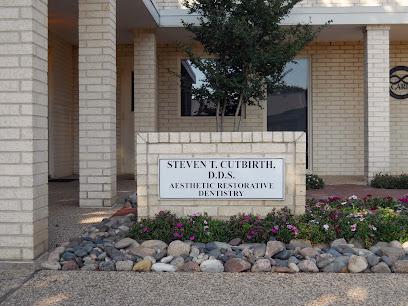


Waco dentist, Dr. Cutbirth is a published author and international speaker on the topics of complex restorative dentistry, including implants; aesthetic dentistry including porcelain veneers, crowns and bridges, replacing missing teeth, and the diagnosis and treatment of facial pain (TMJ).

Prior to his training in complex restorative dentistry, aesthetic restorative dentistry and the diagnosis and treatment of facial pain (TMJ), Dr. Cutbirth completed a two-year oral surgery fellowship at Baylor College of Dentistry in Dallas, Texas. During that fellowship, Dr. Cutbirth attained extensive skill in oral surgery and became certified in intravenous (IV) sedation.
Dr. Cutbirth practices general dentistry and can treat most dental conditions. Taking care of patients with a comprehensive approach to their dental situation, and like theyre a member of our own family, captures the essence of Dr. Cutbirths dental practice. This comprehensive approach to a patients dental health does not necessarily mean restoring all of a patients teeth. Treating a dental patient comprehensively simply means that the patient and dentist understand the patients overall dental condition so that the best-informed decisions can be made regarding maintaining the patients dental health.

Our Waco dental office is not a high volume toothache practice. If you have a toothache, we will absolutely get you out of pain, but Dr. Cutbirth will not complete any definitive dental treatment until we have thoroughly examined your overall dental condition.
The concept of Comprehensive Dentistry is similar to that of remodeling a house. Prior to fixing the kitchen, the remodeler would like to know if the foundation of the house is sound, if the house has termites, if the owners plan is to one day knock out some walls, or to modify the wallpaper/paint scheme in other words, what is the overall condition of the house and what is the overall plan for restoration?
In dentistry, much like home remodeling, everything is connected. Prior to any definitive dental restoration, the patient and dentist should know if the patient has any of the following presenting conditions: 1) periodontal disease, 2) decay, 3) large, unstable, leaky fillings, or 4) TMJ/bite problems. Additionally, 6) does the patient wish to change the color of their teeth, 7) are there other teeth with problems the patient wishes to restore at the same time? This question becomes especially relevant if the patient chooses to be sedated. With I.V. sedation dentistry, extensive dental treatment can be accomplished in one or two visits.
We see many patients who need no dental treatment, but simply desire a thorough dental assessment, cleaning, and oral hygiene/prevention instruction. We have all ages of children and adults in our hygiene cleaning/recall system.


