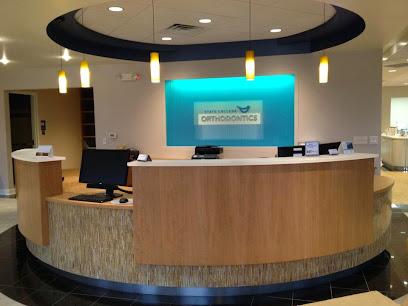


At State College Orthodontics, we value the fact that successful orthodontic treatment is the result of working together as a team. Along with your family dentist, we are dedicated to helping you achieve a beautiful, healthy smile.

After I graduated from Penn State with a B.S. with honors in Biology, I attended Temple University School of Dentistry where I received my D.M.D. During my second year of dental school, I realized what a great fit the specialty of Orthodontics was for me. From the principles of growth and development and the biology of tooth movement to the clinical applications of improving someones bite, it provided the perfect balance for my scientific curiosity and desire to help and care for people.
At the completion of dental school, I attended the University of Maryland Dental School for a three year post-graduate dental residency in Orthodontics. While in residency, I had the opportunity to participate in craniofacial genetic research at the Johns Hopkins Hospital Center for Craniofacial Disease and Disorders. In addition to earning a certificate in Orthodontics, I also received a Masters of Science in Oral Biology.
Accompanied by a fabulous team, I am happy to be part of a warm and friendly environment at State College Orthodontics. Together, we strive to create a positive atmosphere for each other and the people we serve.
Being a solo practitioner has allowed me to balance my commitments to my family and my patients to the best of my ability. I truly love what I do. Both personally and professionally, I try to be a positive influence in the lives of others.





Congratulations you are on your way to a great smile! While your teeth are moving and your bite is changing, keep in mind that your mouth will be a work in progress. Here are some quick tips to help you through your first days:
Avoiding certain foods and minimizing sugar intake during orthodontic treatment are necessary steps toward a fast, predictable and enjoyable orthodontic experience. Your braces may be damaged or loosened by eating hard or sticky foods. Loose brackets, bands and wires that need to be replaced will increase your time in braces.
Foods high in sugar content can cause bacteria in your mouth to start producing acids which can cause permanent stains and damage to your teeth. Acidic foods, such as sodas (even diet sodas!), lemons and lemon juice can also cause permanent stains and damage your teeth. Once the irreversible white stains, known as decalcifications, are present, the only way of correcting them is for your dentist to replace them with fillings.
Braces are made up of many different parts from bands or brackets that attach to teeth to the wires that move the them. Knowing the correct names facilitates communication between the patient and the orthodontic team.
Also known as spacers, separators are small elastic or metal rings that are placed in between two teeth. Separators are used to create space between teeth in preparation of placing orthodontic bands. You should avoid eating anything sticky or chewy once the separators are placed in the mouth.
Typically 1-2 weeks before braces or other appliances (such as expanders or space maintainers) are placed, these small rubber bands are placed between the teeth. They can make the area sore for a couple of days; over-the-counter analgesics such as ibuprofen or acetaminophen have proven helpful for some patients.
Once enough space is made between two teeth, a separator or spacer will fall out of the mouth. In general, we encourage you to call us if the separator falls out within 2 to 3 days after it is placed.
When you got your orthodontic appliance, you were shown how to take care of it. Here are some helpful videos to remind you of the best techniques for keeping your appliance(s) clean. On occasion, we will encourage you to visit your family dentist more than twice a year. A professional dental cleaning with your dental hygienist may be recommended three to four times a year.
Using a soft-bristled toothbrush and a small amount of toothpaste, place the bristles where the gums and teeth meet. Use small, circular motions around the gum line spending approximately 10 seconds on each tooth. Brush the upper and lower dental arches slowly, spending time on EVERY TOOTH. For the lower teeth, brush UP from the gum line to the tooth; for the upper teeth, brush DOWN from the gum line to the tooth. Dont forget to brush behind your teeth. Brushing your tongue will help get rid of the bacteria that cause bad breath. Special brushes, called proxabrushes, can be used between the braces. Try to brush your teeth after every meal. If you cannot brush right away, rinse well with water. Electronic toothbrushes and waterpiks can be helpful tools that reach the hard-to-reach areas. We recommend consulting with your family dentist and dental hygienist for the toothbrushes they recommend.
Using a soft-bristled toothbrush, take care to place the toothbrush in the recommended position and brush as shown. Keep in mind that proper brushing with braces is necessary to keep the teeth and gums healthy both during and after orthodontic treatment.
Using small toothbrushes that fit between the braces, remove the food particles and plaque that accumulate between the brackets on a daily braces. The proxabrushes are very useful in cleaning around the brackets.
Using pre-threaded floss or dental floss on a floss threader, carfully pull the dental floss between the wire and braces. Carefully floss around the braces and gum area. Remove the floss, rethread, and place under the wire of the tooth next in line. In addition to brushing and flossing a special mouth rinse or toothpaste with a higher fluoride concentration may be recommended.
Decalcification is the most common thing that can wrong with orthodontic treatment. Fortunately, it is TOTALLY PREVENTABLE. By avoiding foods high in sugar and acid as well as taking the time each day to properly brush and floss around orthodontic appliances, the risk of developing decalcifications can be eliminated.
If something unexpected occurs during your orthodontic treatment, we encourage you to contact us immediately. While it may not necessitate a visit to the office, it is helpful for you to get appropriate information when handling an orthodontic emergency. Here are some of the most common things that can unexpectedly occur.
Although this is rare, it does happen. Try to stay calm. Most often the swallowed appliance passes without any issue. However, on occasion, it can be aspirated. Coughing or trouble breathing are indications that it may have been aspirated. Call the office immediately. If there is a chance that it has been aspirated, you will be directed to get a chest film to confirm its position.
Retainers are just as important as braces. When your braces are removed, you will be given retainers for your top and bottom teeth. In general, there are two types of retainers: fixed (cemented) and removable. It is important for you to know that you will need your retainers for life. Just like you commit to wearing eyeglasses when you are first diagnosed with a vision problem; you will depend upon your retainers to hold your teeth in their final position after your braces are removed. Without retainers, your teeth can and will shift thoroughout life.