

A: An orthodontist is a dentist who has attended four years of dental training at an ADA accredited dental school and has graduated from a 2 to 3 year advanced university based specialty training program in orthodontics that is necessary for the treatment and correction of misaligned teeth and jaws. If the orthodontist is a member of the American Association of Orthodontists, like all of our doctors, you can be assured they have received the appropriate training.
A: The American Association of Orthodontists recommends that all patients be seen for an orthodontic examination by age 7. Many severe problems can be prevented from fully developing by initiating early orthodontic treatment (age 7 to 9 years old). It is best to be seen by an orthodontist at or before age 7 to determine if they have orthodontic problems and when would be the appropriate time for the orthodontist to intervene with treatment of these problems.
A: Believe it or not, 30 percent of our patients are adults and the number is growing. Many adult patients think that their teeth cannot be moved. This is definitely not true. In fact, in many cases they move even better, because adult patients tend to be more cooperative than some of our younger patients.
A: Many patients have orthodontic benefits as part of their dental plan. Please check with your insurance or benefits manager as to the extent of your coverage. Not all patients with dental coverage have orthodontic coverage. This is dependent on the employers decision as to the extent of dental coverage they wish to purchase. Orthodontic insurance generally differs from regular dental insurance in that each insured individual usually has a lifetime maximum benefit for orthodontic services. This benefit is paid as a percentage of the orthodontic fee until the benefit maximum has been reached. Our office is glad to help you with your insurance needs.
A: Drs. Savage, Sabol & Visser are using the most current technology for orthodontic movement of teeth. These latest technological advances have made treatment more comfortable for patients. The orthodontic braces are smaller and smoother, plus gentle wires provide continuous light forces over a longer period of time. Typically the patient is not uncomfortable while in the office but will experience some minor discomfort for two to three days after each adjustment. Over the counter pain relievers can be taken for sore teeth.
A: You should be able to play just about any sport or activity. Although we highly recommend wearing a mouth guard in contact sports or any sports where there is a chance that you could be hit in the face.
A: Orthodontics will not only improve the smile but will improve the alignment and the fit of the teeth to improve any misalignment of the jaw and improve the overall function of your bite. Crooked teeth can lead to cavities or gum disease and a bad bite can lead to chewing problems and possible muscle soreness and jaw joint discomfort.
A: Retainers are designed primarily to retain teeth in the position they have been moved to following orthodontic treatment. It is possible to produce some slight movement of teeth with a retainer. When braces are removed all patients receive a retainer to hold their teeth in position. The teeth tend to shift back towards the original problem without wearing retainers.
A: Throughout life your teeth are always moving, even if you have never had braces. It happens more in some people than others. For this reason, we recommend wearing retainers as long as you can. Usually we have patients wear retainers 12 hours per day for 3 months and then while sleeping thereafter.
Yes. Our offices use one of the most sophisticated instrument sterilization techniques available. Our sterilization procedures comply with the standards developed by the Center for Disease Control, the American Dental Association, and the Occupational Safety and Health Administration (OSHA). The effectiveness of our sterilization protocol is independently monitored on a regular basis. We want you to rest assured that your health is our foremost concern.
A: Many factors determine length of treatment, such as bite problem, response to treatment, and cooperation on the part of the patient. You may be surprised to hear that age is not a major factor. Although, some minor tooth movement can be resolved in less than a year, complex cases may need 18-24 months for completion.
A: Interceptive or early treatment is initiated at 7 to 9 years of age for severe bite problems. Some problems must be treated at a younger age to produce the best orthodontic result. If a severe problem is delayed to a later age a complete correction may not be possible. Early orthodontic treatment can sometimes avoid extractions of permanent teeth and can produce a more stable result. Phase I treatment is typically for 12 to 18 months followed by retainers for several years until all permanent teeth erupt. Most patients require Phase II (full braces) at approximately age 12 to finish the correction of the bite problem.
A: Sixteen new permanent teeth will have erupted between the age of 10 to 12 years old. At approximately age 12 Drs. Savage, Sabol & Visser will recommend complete diagnostic records to determine the extent, method, and costs of Phase II treatment. The extent of Phase II treatment can range from new retainers up to full braces for one to two years to finish correction of the bite problem following a Phase I treatment.
A: Surgical orthodontics are recommended for adult patients and some teenagers with severe skeletal deformities. Sometimes the jaw position is so far off from normal that conventional orthodontic care cannot correct the skeletal deformity. Surgical orthodontics is done in combination with full orthodontic appliances. Surgery of the jaw structure usually occurs during the middle of comprehensive orthodontic treatment approximately one year after the braces are applied to the teeth.
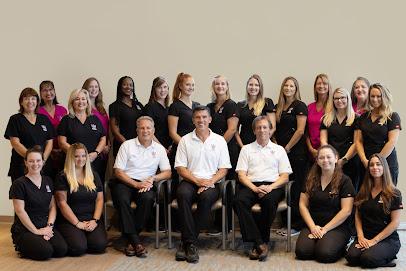
Drs. Savage, Sabol & Visser are dedicated to providing quality orthodontic treatment in a courteous and professional manner. We want all of our patients to have a smile that enhances their appearance, health, comfort, and self-esteem. We strive to provide service and treatments that are both highly professional and efficient, ensuring that the orthodontic experience is gratifying for our patients, parents, and staff members.


Dr. Anthony W. Savage is an orthodontist serving residents throughout Virginia Beach. He is an honor graduate of the Medical College of Virginia School of Dentistry. Upon graduation he was elected to the OKU Dental Honor Society. He completed his specialty training in Orthodontics at the University of Louisville in Kentucky. Dr. Savage has served as an orthodontic/surgery consultant at Portsmouth Naval Hospital, President of the Tidewater Association of Orthodontics, President of the Virginia Association of Orthodontics, and is now the current Vice President of a branch of the American Association of Orthodontics known as the Southern Association of Orthodontics. Dr Savage is also the current Vice President of the Flying Dentist Association. Dr. Savage and his wife, Cheryl, reside in Virginia Beach. They have two wonderful adult children an awesome son in law and a really cool first grandchild. Dr. Savage is a retired member of the US Naval Reserves. The family enjoys flying, sailing, snowboarding and volunteer work at Catholic Charities of Eastern Virginia and his church. He enjoys helping others by providing free air transportation to any group where patients are in need of out of town hospital care.

Dr. George J. Sabol is an orthodontist serving residents throughout Virginia Beach. He is a graduate of Virginia Tech with a BS degree in electrical engineering. After completing his undergraduate studies, he received his dental degree from the Medical College of Virginia School of Dentistry. As an honor graduate he was selected to the OKU Dental Honor Society. Dr. Sabol completed his specialty training in orthodontics at the Medical College of Virginia School of Dentistry. Dr. Sabol has lectured both locally and nationally on various orthodontic topics including multidisciplinary treatment of complex adult cases. He has served as the orthodontic consultant for a local Cleft Palate clinic. Dr. Sabol has presided as president of both local and state orthodontic societies. He is active in the community as a Rotarian and enjoys volunteering for local charities. Dr. Sabol and his wife, Sherri, reside in Virginia Beach with their three children. As a family they enjoy sailing, skiing/snowboarding and golf.