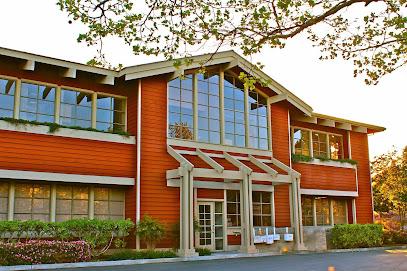


Dr. Rouleau was born and raised in Barre, Vermont. He lived with his parents, Bert and Sylvia, and his siblings, Marc and Robin. He graduated from the University of Vermont in 1975 with a Bachelor in Science and then moved to Boston and attended Tufts University where he received his general dental degree (DMD) in 1978. He then continued his studies at Northwestern University and got his Masters of Science and an advanced degree in Pediatric Dentistry in 1980. Dr. Rouleau then made the move across the country to San Francisco where he completed his dental training at the University of Pacific, now known as the Arthur A. Dugoni School of Dentistry, in 1982 where he completed his residency in orthodontics. Dr. Rouleau specializes in Orthodontics for children and adults and has been practicing in the Mid-Peninsula for over 30 years.
Dr. Rouleau remains an active member of numerous professional organizations, including the American Dental Association, the American Association of Orthodontists, the Pacific Coast Society of Orthodontists and the California Association of Orthodontists. He is a past president of the Mid-Peninsula Dental Society and since 2010 he has served as the Trustee. He is also on faculty at the Arthur A. Dugoni School of Dentistry (UOP in San Francisco) where he teaches in the orthodontic department. Dr. Rouleau is also very active in the local dental society, most recently involved in the Community Service Committee and Ethics Committee. He donates to many charities, including the Ronald McDonald House, Habitat for Humanity, and Blind Babies Foundation. He also participates in the Second Harvest Food Bank twice a year, volunteers at CDA cares providing dental care to the underprivileged around California and donates to several schools around the peninsula.
It was during his studies at the University of Pacific where Dr. Rouleau met his wife, Mary. They have been together since 1983 and have four wonderful children; Sean, Aaron, Nic, and Lizzie. He is very proud that all of his children have successfully graduated from college and are all excelling in their careers! When Dr. Rouleau is not working, he enjoys playing golf, skiing, traveling, and spending time with his family, including his five adorable grandchildren.
No. All orthodontists must be licensed to practice, but at this time only 1 in 3 orthodontists have continued on to complete Board Certification. The American Board of Orthodontics (ABO) certification process signifies a unique achievementa significant step beyond the two to three years of advanced education required for a dentist to become a specialist in orthodontics. The process requires the orthodontist to demonstrate actual accomplishments in patient care with detailed case reports on the treatment provided for a broad range of patient problems. Board certification is a voluntary achievement that all orthodontists do not choose to pursue. In order to become board certified by the ABO, an individual orthodontist is thoroughly interviewed by a highly respected panel of examiners to demonstrate their orthodontic knowledge, clinical skills and judgment.
One. The American Board of Orthodontics (ABO) is the only certifying board in the specialty that is recognized by the American Dental Association. The ABO was founded in 1929 and is the oldest specialty board in dentistry. The boards purpose is to elevate the quality of orthodontic care for the public by promoting excellence through certification, education and professional collaboration.
Successful completion of the examination process demonstrates the orthodontists highest commitment to excellence in orthodontics to both the orthodontic profession and the general public. It represents a commitment by a licensed specialist that he/she has the necessary knowledge base and skills to treat patients to the highest of standards. It exemplifies a practitioners commitment to continue to keep abreast of the latest advances in patient care, and to continue to deliver these latest advances to patients. Many orthodontists see it as a demonstration of their dedication to the specialty and the highest level of personal achievement.

Since the establishment of the ABO in 1929, the certification process requirements have continued to adjust to the demands of the specialty. Today, the process involves a thorough Written Examination (240 questions) covering all areas of information which an orthodontist should be knowledgeable. Successful completion of this board exam allows the orthodontist to proceed to the Clinical Examination where they present detailed case reports from their practice/residency, demonstrating a history of excellence in patient care. These cases are evaluated by a panel of examiners and later discussed during an oral examination where the applicant is tested on a wide variety of academic and clinical topics. After successful completion of these examinations, the orthodontist has officially achieved Board Certification, for a time-limited period. The orthodontist must go through Certification Renewal every 10 years to maintain their certification status by demonstrating this continued level of patient care.