

Dr. Pollock is a Board Certified Diplomate of the American Board of Oral and Maxillofacial Surgery, a member of the North Texas Society of Oral and Maxillofacial Surgeons, as well as the 4th District and Rockwall Dental Societies. He is also a member of the American Dental Association, a fellow of the American Association of Oral and Maxillofacial Surgeons, and a Diplomate of the American Dental Society for Anesthesiology.


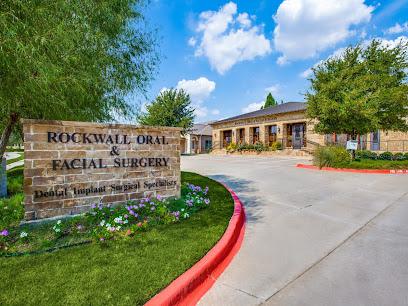
Dr. Kevin Pollock started the Rockwall Oral and Facial Surgery practice in June, 2001. Prior to relocating to Rockwall, he practiced in Floridas largest group practice in Ft. Myers. After five years, he and his wife decided to move their family back to Texas.
He served an additional year as an oral and maxillofacial surgery intern at Baylor medical Center in Dallas. He completed a four year Oral and Maxillofacial Surgery Residency in Detroit, Michigan at Henry Ford Hospital in June, 1996.
During his residency, he did surgical research into obstructive sleep apnea. He is trained in laser surgery for the treatment of snoring as well as aesthetic facial procedures, including Botox and facial fillers.
In college and in dental school, he was a member of the Deans List and various Honor Societies. He also holds a Master of Science Degree in Sports Medicine and a Bachelor of Science Degree in Biology, both from Texas Tech University.


The third molars are more commonly called wisdom teeth. However, have you ever wondered why? These last 4 teeth received the nickname because of the timeframe in which they erupt. While all of your other adult teeth erupt by around the age of 13, the wisdom teeth do not erupt until your late teens the to early 20s. This is a transitional period when you go from adolescence to adulthood. At this time, you are thought to be wiser, hence the name.
When you need your wisdom teethextracted, the procedure should be done by anOMS. As OMS experts, we have the training, the experience, and the expertise to extract your wisdom teeth safely and reduce the risk of complications such as infections and other issues. We can also deal with more complex situations to provide you with the best possible results, restoring your oral health and improving your quality of life.Extracting your wisdom teeth can help to alleviate pain while restoring your oral health and your quality of life.
It can take about two weeks to heal from wisdom teeth surgery. Following surgery, pain and swelling are common. You may also experience some bruising. It is important for you to rest and take it easy for at least the first few days after surgery. Maintain adiet of soft foodsand follow postsurgical care instructions. Swelling should begin to dissipate after the first few days and jaws stiffness and soreness should go away about a week after surgery. Recovery is different from everyone, but it is important that you follow your post-surgical instructions to avoid complications.
The wisdom teeth were once very important. The diet of our ancestors consisted of a substantial amount of rough, coarse foods, all of which took a significant amount of chewing. The wisdom teeth aided in breaking down these foods to digest them. Following the invention of cooking, however, food was made softer and easier to chew. The wisdom teeth have essentially become obsolete, but they continue to develop.