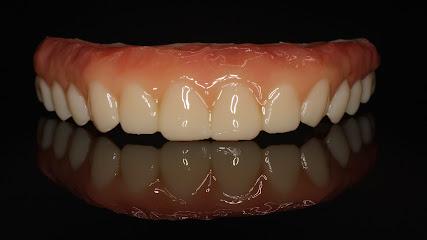


RiverTree Dental and Implants is a Fort Worth based family dentist practice that treats patients of all ages. We are committed to delivering the highest quality dental care and do so using advanced dental equipment. We are a cosmetic dentist that offers services like checkups, teeth cleaning, crowns, veneers and more.
Dr. Morton Baker grew up in Oklahoma where he received his undergraduate education at Northeastern State University. He later went to South Korea where he taught English as a Second Language at a middle school in Daegu, South Korea. After returning to the States, Dr. Baker went to dental school at the University of Louisville in Kentucky where he was the vice-president of his class. He was also a founding member of Technology in Dentistry, a group focused on providing dental students with access to the most up to date technology utilized in dentistry.
Dr. Baker has a passion for learning and attends hundreds of hours of continuing education courses annually. He has placed over one thousand implants and is proficient at various bone and soft tissue augmentation procedures.
An implant dentist is a dental professional who is qualified to place surgical fixtures that anchor dental prostheses. Implant dentistry offers patients a permanent, comfortable, and effective way to improve their mouths look and function. Implants allow placement of dental prostheses such as replacement teeth, crowns, and bridges in the jaw.
According to the American Dental Association, all dentists are qualified to place dental implants. While it is legal for any licensed dentist to place dental implants, implant dentists have more advanced training and experience. Dentists who specialize in implants receive more formal training and education to perform these procedures with a high degree of success.
Implant dentists have additional training and experience with anticipating, diagnosing, and treating surgical complications. Since implant dentists focus on implant procedures, they perform them more often than general dentists. Their extensive experience provides patients with a safety and comfort level that does not exist when dentists with less training and experience perform these procedures.
Dental implant procedures involve inserting an implant to act as an artificial root, anchoring a custom restorative device. There are two major types of dental implants, endosteal and subperiosteal. Endosteal implants are the most commonly used dental implant and placed in the jawbone. They are usually made of titanium and shaped like small screws.
Subperiosteal implants are implants that we put under the gum but not in the jawbone. This type of implant is best for patients who do not have enough healthy natural jawbone and cannot undergo a procedure to rebuild it. In other cases, we can rebuild the bone through a bone augmentation, a sinus lift, or a ridge expansion to provide a sturdy foundation for an implant.
Dental implants and dentures are both common options to replace missing teeth. Dental implants are a permanent solution to replace a missing tooth or teeth. Dentures are removable appliances that replace missing teeth and some gum tissue.
Many patients often opt for implants due to their natural appearance and function. However, people must have healthy gums and jaws to receive a dental implant. Dentures may be the right choice for patients who have gums or jaw that are weak or unhealthy.
Implant-supported crowns are a popular solution for missing teeth, but they are not the only option available. Implant dentists can also provide implant-supported dentures or bridges. While crowns replace one missing tooth at a time, bridges can restore multiple missing teeth at once. The number of implants placed will depend on the bridge size.
According to the American Academy of Implant Dentistry, almost anyone missing at least one tooth can receive a dental implant once facial growth and development are complete. To qualify for an implant, the person should be in good general health with healthy gums and enough bone to hold the implant. They must also have good oral hygiene and attend regular dental visits.
People with one or more missing teeth can benefit from receiving treatment from an implant dentist. In some severe tooth loss cases, an implant dentist can replace all of a patients teeth. Dental implants can significantly improve the quality of life of a patient with missing teeth. These restorations can improve the appearance, function, and feel of teeth and help people eat, speak, and feel confident.
A. The success rate of dental implant procedures is typically very high. However, the success rate is affected by the patients oral hygiene and the implant location. Implant procedures have a success rate of up to 98%.
A. No, dental implants are generally not removable. Unlike dentures, implants are fixed permanently in the jaw or skull. They are permanent additions to your mouth and function like normal teeth. A dentist can take them out if medically necessary.
A. There are many benefits to receiving dental implants. Many patients report opting for implants because they are the most similar to real teeth. They have a more natural look, feel, and function than other tooth-replacement options.
A. Dental implants are safe and effective tooth replacements. Like any other surgical procedure, there is a possibility of experiencing complications. Following all aftercare instructions will help to reduce the likelihood of complications arising from implant surgery.
A. You can care for your dental implants the same way you take care of your other teeth. Brushing and flossing daily and regular cleaning and check-ups at the dentist will ensure that implants stay in good condition. Implants have the potential to last for several decades if cared for properly.
By visiting us as soon as possible, our team can help get you the professional treatment you need. Instead of waiting around and allowing the symptoms to get worse, we can provide you with treatment options.
The All-on-4 procedure can significantly improve one's oral health and appearance. However, in order to achieve both, it is necessary to go through the entire process, which is known to be involved. Once the procedure is complete, the patient should prepare to undergo a lengthy recovery process. Recovery tends to be lengthy because the dental
Braces come with many benefits for patients, but one disadvantage that a general dentist may point out is staining. Stains are not an unavoidable result of having braces on for long periods of time. However, braces can make it harder to thoroughly clean teeth on a regular basis, which can eventually lead to stains. Here
A general dentist is the dental equivalent of a primary care physician. A general dental professional is the person dental patients can go to for routine preventative care and diagnosis of any oral health problems. There are multiple benefits to establishing a relationship with a general dentist.Maintaining oral health is important for both the health