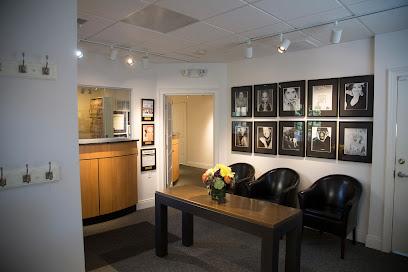


Papasikos Orthodontics is committed to giving you your idealsmile so you can live a life full of smiles and laughter. Our orthodontictreatments are convenient, affordable, and suitable for both children and adults.
Expert Training: Drs. Jacy and Arianna Papasikos are both orthodontic specialists. Orthodontists must become dentists first and then go on to receive additional orthodontic specialty training where they learn the skills required to manage tooth movement and facial development. Our doctors spent 10-11 years in training (4 years of college, 4 years of dental school, and 2-3 years of orthodontic residency). Additionally, both doctors received Invisalign training directly from one of the pioneers of the Invisalign system.
Personalized Service: As a brother and sister team, we develop close relationships with our patients and treat them like family. Every patient is made to feel at home with individualized care in a positive and friendly environment. Our doctors and staff are easily accessible and available to you at all times.
Modern Techniques:We use 3D digital impressions/molds and imaging for all types of treatment. We offer state-of-the-art esthetic options, such as Invisalign, Invisalign Teen, clear/invisible braces, and morefor Montclair, Glen Ridge, Verona, Clifton, Bloomfield, West Orange, and Essex County, New Jersey.
Flexible Payments:We dont want anything to stand in your way of obtaining the smile you desire. We will work with you to find a cost that is affordable and manageable for your budget. We offer flexible, interest-free monthly payment plans as well as 3rd party financing with no down payment.

Dr. Jacy earned his Bachelor of Arts degree from the University of North Carolina at Chapel Hill and Ivy-league dental training at the University of Pennsylvania, where he received a Doctorate of Dental Medicine, graduating top of his class. He then went on to Temple University for his orthodontic residency, where he obtained an additional two years of specialty training in orthodontics in addition to a Masters Degree in Oral Biology. Dr. Jacy conducted extensive research at Temple on facial esthetics, using advanced three-dimensional technology to better understand how orthodontic treatment can affect facial beauty.
Dr. Jacy grew up around Montclair and was a full-time athlete in high-school and college, playing soccer and lacrosse. Dr. Jacy is currently an assistant coach for the Montclair middle school lacrosse team. His wife is also in the dental field and works as a dental hygienist. Besides both being passionate about teeth, they love outdoor activities, going to the shore, trying new restaurants, and spending time with their dog.

Dr. Arianna earned her Bachelor of Arts degree from the University of Virginia and her Doctorate of Dental Medicine from the University of Medicine and Dentistry of New Jersey, where she received an academic scholarship. Following dental school, Dr. Arianna completed a dental residency program at Overlook Hospital in Summit, NJ, and treated many complexes, interdisciplinary cases. She continued on to attend a dual-degree postgraduate program, where she received three years of orthodontic specialty training and a Master of Business Administration at the Roseman University of Health Sciences College of Dental Medicine in Henderson, NV.
Whether your child is 7 or 13, finding the right doctor and the right treatment for your youngster is crucial. Most professionals say that orthodontic exams should begin no later than age 7. The following early warning signs usually indicate that your child should have an orthodontic exam:
Early or late loss of teeth Speech difficulty Difficulty in chewing or biting Biting the cheek or into the roof of the mouth Mouth breathing Protruding teeth Finger-sucking or other oral habits Teeth that meet in an abnormal way or dont meet at all Crowding, misplaced, or blocked-out teeth Facial imbalance Jaws that shift, make sounds, protrude or retrude
The American Association of Orthodontists recommends visiting the orthodontist around age 7. Although most children do not require early interceptive treatment (Phase I), it can prevent more serious conditions from developing as well as the need for costly and painfultooth extractions, jaw surgery, or dental trauma.In some cases, we will be able to achieve results that may not be possible once the face andjaws have finished growing.
When assessing the need for Phase 1 treatment, we only recommend treatment when there is a moderate to severe orthodontic problem that should not wait until later to be treated. We always look for the most conservative treatment options which may include partial braces, palate expanders, or space maintainers. Treatment duration is typically around a year or less.


Comprehensive treatment (Phase II) begins when most of the permanent teeth have erupted which is typically between the ages of 11and 13. Those individuals that received Phase I treatment to correct severe problems often experience shorter and more simple Phase II treatment than they otherwise would have.
During this phase, both upper and lower teeth are moved by using either braces or Invisalign aligners, and treatment duration can range anywhere from one to two years depending on complexity. Retainers are worn after this phase to ensure that results are maintained.