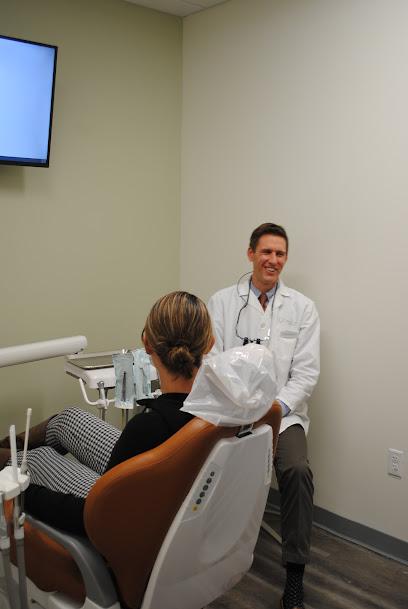


Dr. Pedersen loves meeting new patients and hearing their stories and where they are from. He has always looked to give back to the community and has volunteered domestically and abroad to provide diagnostic and surgical care.
Dr. Pedersen loves meeting new patients and hearing their stories and where they are from. Dr. Pedersen graduated from Tufts University and went on to graduate from Tufts University School of Dental Medicine, where he received an award for service to the community and promoting diversity. Following dental school, Dr. Pedersen and his wife, Emma, moved to Chapel Hill, North Carolina where she pursued a Ph.D. at UNC.
Dr. Pedersen completed a residency in Advanced General Dentistry at the University of North Carolina School of Dentistry, focusing on complex surgical and restorative care. Dr. Pedersen is always looking to give back to the community. He has volunteered domestically and abroad to provide diagnostic and surgical care.

Please note that we try our best to stay on schedule and minimize your wait times. Sometimes emergency cases can arise, or unforeseen circumstances can lengthen the time for a procedure. We appreciate your understanding.
Some common side effects of dental procedures are teeth sensitivity, sore gums, slight affliction to your speech, and increased salivation. Rinsing with warm saltwater and continuing to brush and floss daily can help many of these symptoms disappear. However, there are certain dental procedures that may require a longer recover time, weve listed those below.
Occasionally, a temporary crown may come off. Call usif this happens and bring the temporary crown with you so we can re-cement it. It is very important for the temporary to stay in place, as it will prevent other teeth from moving and compromising the fit of your final restoration.
To keep your temporaries in place, avoid eating sticky foods (gum), hard foods, and if possible, chew on the opposite side of your mouth. It is important to brush normally, but floss carefully. Dont pull up on the floss, which may dislodge the temporary, pull the floss out from the side of the temporary crown.
After the blood clot forms, it is important not to disturb or dislodge the clot as it aids healing. Do not rinse vigorously, suck on straws, smoke, drink alcohol or brush teeth next to the extraction site for 72 hours. These activities will dislodge or dissolve the clot and retard the healing process. Limit vigorous exercise for the next 24 hours as this will increase blood pressure and may cause more bleeding from the extraction site.
After the tooth is extracted you may feel some pain and experience some swelling. An ice pack or an unopened bag of frozen peas or corn applied to the area will keep swelling to a minimum. Take pain medications as prescribed. The swelling usually subsides after 48 hours.
Use the pain medication as directed. Call the officeif the medication doesnt seem to be working. If antibiotics are prescribed, continue to take them for the indicated length of time, even if signs and symptoms of infection are gone. Drink lots of fluid and eat nutritious soft food on the day of the extraction. You can eat normally as soon as you are comfortable.
It is important to resume your normal dental routine after 24 hours. This should include brushing and flossing your teeth at least once a day. This will speed healing and help keep your mouth fresh and clean.
After a few days you will feel fine and can resume your normal activities. If you have heavy bleeding, severe pain, continued swelling for 2-3 days, or a reaction to the medication, call our office immediately.