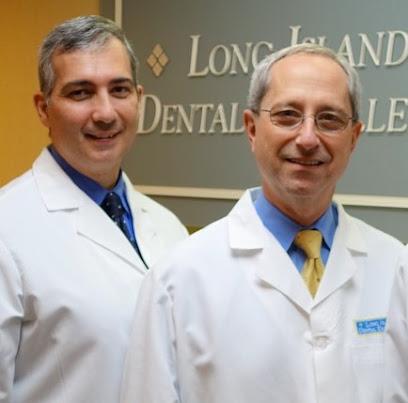


This is no ordinary practice; it really is extraordinary. Dr. Michael J. Rechter is proud to be a 3rd generation Dentist following in both of his parents and grandfathers footsteps. His passion for dentistry is demonstrated in everything he does.
He has amassed over 1000 hours in continuing education and combined with a state-of-the-art office he is capable of offering you and your family the high level of care you're looking for. The entire team at Long Island Dental Excellence will give you a warm welcome and their ongoing commitment to your dental health is their top priority.
Dr. Rechter has the ability to listen to your needs, answer all your questions and offer you the personalized attention you deserve. Combined with his compassionate, easy going personality you will be at total ease creating a very positive dental experience.
Dr. Michael J Rechter is proud to have been serving the Rockville Centre community for over 25 years. Long Island Dental Excellence is a leading dental practice in Long Island, New York specializing in state-of-the-art digital dentistry, sedation dentistry, cosmetic dentistry, veneers & implants, whitening & brightening smiles, Invisalign and more.


Dr 'T' is a Board Certified Periodontist and joined Long Island Dental Excellence in October 2011. Born in Greece, he moved to the United States at the age of 8. He recieved his undergraduate degree in Bio-Chemistry from SUNY Stony Brook in 1992 and completed his dental degree from NYU College of Dentistry in 1997. He practiced as a general dentist for several years before finishing his post-doctoral studies in periodontics also at NYU in 2003.
Dr. Jinkyu Im is a graduate of NYU College of Dentistry and earned his bachelors degree in Biology from Adelphi University. Upon completion of dental school, Dr. Im enlisted in the U.S. Army at the rank of Captain and was stationed in Vilseck, Germany for three years. The military experience helped to mold and shape Dr. Im into the caring and patient practitioner that he is today. With great mentorship from experienced senior dental officers he learned how to attentively listen to his patients, to understand their needs, determine the appropriate course of treatment and provide the best care available. The military experience exposed him to some of the best continuing education available and many different aspects of dentistry.
One of the most common oral health problems for diabetics is dry mouth or altered salivary flow (or xerostomia, if you like medical terms). The teeth and muscles in the mouth, face and jaw chew the food into smaller pieces to facilitate digestion in the stomach and intestine. The saliva has several functions. It prevents infection by controlling bacteria in the mouth. It moistens and cleanses the mouth by neutralizing acids produced by dental plaque, and it washes away the dead skin cells that accumulate on the gums, tongue and cheeks. It helps with the digestion, making it possible to chew, taste and swallow food. Dry mouth occurs when there is not enough saliva (real or perceived) to keep your mouth moist, which is important for health, comfort and for speaking. Diagnosis of dry mouth is difficult due to the subjective nature of this condition.
In most cases, dry mouth is due to side effects of medications. There are over 500 prescription and nonprescription medications that have been found to cause dry mouth. Medications that treat high blood pressure or other heart problems are used by many patients to manage complications of diabetes. Other drug groups that cause dry mouth are those used for depression, anxiety and allergies, as well as diuretics, anti-psychotics, muscle relaxants, sedatives and anti-inflammatory medications. Caffeinated beverages also cause dry mouth, and these should be limited.
Ask your pharmacist about side effects of your medications in order to avoid any possible problems. It is important that diabetes patients drink water frequently while on these medications, as well as for their general health. Also, be sure to see your dentist and dental hygienist for an oral examination and dental prophylaxis at least every six months to minimize or prevent the development of oral health problems. Optimal oral health will improve your diabetes control and your quality of life.
No one enjoys going to the dentist, but for people with diabetes, getting that cleaning and check-up are especially important. The link between diabetes and oral health can 't be ignored. In fact, dental problems in people with diabetes are so rampant that Mark Finney, DDS, believes oral disease should be referred to as 'the sixth 'opathy ' of diabetes,' deserving of the attention given to retinopathy, neuropathy, nephropathy and the like.
While everyone is prone to periodontitis, or diseases of the tissues surrounding the teeth and gums, people with diabetes often have more severe cases that can both cause and predict additional diabetic complications.
Periodontitis or periodontal diseases involve inflammation and destruction of the tissues supporting and surrounding the teeth, including the gums and supporting bone. Periodontitis destroys the periodontal ligaments or connective tissue fibers that attach the tooth to the bone causing resorption of the alveolar bone (tooth socket). Consequently, the gums swell, redden, change shape, bleed, teeth loosen and pus forms. With the loss of soft tissue and bony support, deep periodontal pockets may form that foster bacterial growth.
The formation of plaque on the teeth is the first step toward periodontal disease. Plaque, the white sticky substance that collects between teeth, is often the start of periodontitis. Made of microorganisms, dead skin cells and leukocytes (infection fighting white blood cells), it can be removed by brushing and flossing regularly. If it is allowed to build up, it will harden and turn into tartar. Tartar can only be removed with a professional cleaning at the dentist's office. Both plaque and tartar make the gums vulnerable to infection.
If an infection enters the gums it is referred to as gingivitis, the first stage of periodontitis. Bacteria that collect and breed at the gum line and the groove between the gum and the tooth cause the gums to redden, swell and bleed. This response is normal but can also lead to periodontitis. Gums affected by gingivitis often bleed and are sensitive, but not always. Other signs include swollen gums, loose teeth, a bad taste in the mouth and persistent bad breath.
BG control and good oral hygiene seems to be the key to avoiding most dental complications. Everyone is at risk of developing periodontal disease, but all people with diabetes, regardless of age or type of diabetes, are more susceptible. There are several reasons for this.
It also makes healing more difficult once an infection sets in. Just like diabetics with poor BG control have a hard time healing wounds and infections on their feet, their bodies have a hard time fighting infections and healing wounds in the mouth.
At the same time, on-going infections may make BG control more difficult. Inflammation and infection affect BG control no matter where they occur. But the mouth is often overlooked as most doctors do not look in the mouth.
Once an infection takes root a vicious cycle ensues making metabolic and infection control a struggle. This cycle can have drastic consequences. If oral infections get out of control they can lead to BG control problems serious enough to land a person with diabetes in the hospital, to say nothing of the damage to the teeth and gums.
Gum infections can also impact insulin needs. Authors of a study cited in September's 1997's Practical Diabetology concluded that when an infection is rampant, patients with diabetes often have increased insulin requirements. If periodontal disease is treated and gingival inflammation is eliminated, these insulin needs often decrease.
Collagen, which is a building block of the tissue that attaches teeth to bones and the surrounding soft tissue, is also affected by diabetes. Diabetes ' effect on collagen metabolism, according to Finney, 'may make an infection potentially more destructive.'

Obtaining quality dental care is an investment. Discussing financial matters can be very sensitive and delicate. Our financial coordinator is an expert in maximizing insurance benefits as well as presenting payment options. Please don't hesitate to call our office at (516)208-2319 to review your concerns.
Our goal is not to let expense prevent you from benefiting from the quality of care you desire and need. To facilitate this goal we have developed financial options which can fit into everyone's budget. Please call us for details.
Rockville Centre Cosmetic Dentist | Cosmetic Dentist Rockville Centre | Rockville Centre Cosmetic Dentistry | Cosmetic Dentist Oceanside | Cosmetic Dentistry Baldwin | Cosmetic Dentist Lynbrook | Cosmetic Dentistry Long Island | Nassau County Cosmetic Dentist