

Your tooth consists of two main parts: the crown, which is that part of the tooth above the gum and visible in your mouth; and the root or roots, which is that part of the tooth that lies beneath the gum and is surrounded by bone. Inside each root is a channel that runs the length of the tooth. This channel is the root canal and contains the pulp (nerves, blood vessels, and soft tissue), which is often referred to as the nerve of the tooth. The pulp may be irreversibly damaged by bacteria associated with decay, very deep restorations, fractures, trauma, or periodontal disease.

In order to preserve a tooth in which this has occurred, it is necessary to remove the diseased pulp tissue. This procedure is known as endodontic therapy. Since endodontic therapy is concerned with removing only the pulp from the root canal, the root will continue to function normally because the supporting tissues remain intact. It is advisable to remove the injured pulp because it may become infected or act as an irritant to the tissues surrounding the tooth.


The myth: Patients searching the Internet for information on root canals may find sites claiming that teeth receiving root canal (endodontic) treatment contribute to the occurrence of illness and disease in the body. This false claim is based on long-debunked and poorly designed research performed nearly a century ago by Dr. Weston A. Price, at a time before medicine understood the causes of many diseases.
In the 1920s, Dr. Price advocated tooth extractionthe most traumatic dental procedureover endodontic treatment. This resulted in a frightening era of tooth extraction both for treatment of systemic disease and as a prophylactic measure against future illness.
The truth: There is no valid, scientific evidence linking root canal-treated teeth and disease elsewhere in the body.A root canal is a safe and effective procedure. When a severe infection in a tooth requiresendodontic treatment, that treatment is designed toeliminatebacteria from the infected root canal,preventreinfection of the tooth andsavethe natural tooth.
But what about Dr. Price?This is a good example of how the Internet can give new life to long-dispelled theories. Believe it or not, the misinformation about roots canals that is found on the Internet is still based on Dr. Prices century-old, discredited research. Dr. Prices research techniques were criticized at the time they were published, and by the early 1930s, a number of well-designed studies using more modern research techniques discredited his findings. In 1951, theJournal of the American Dental Associationtook the extraordinary step of publishing a special edition reviewing the scientific literature and shifted the standard of practice back to endodontic treatment for teeth with non-vital pulp in instances where the tooth could be saved. TheJADAreviewed Dr. Prices research techniques from the 1920s and noted that they lacked many aspects of modern scientific research, including absence of proper control groups and induction of excessive doses of bacteria.

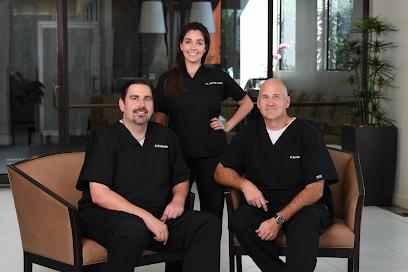
Dr. Hill graduated University of Texas School of Dentistry Houston in 1997. He practiced General Dentistry in the greater Houston and Lake Jackson areas for 9 years where he developed a passion for the specialty of endodontics. He elected to leave private practice to begin his advanced specialty training in 2007 at Univ. Texas School of Dentistry Houston. Dr. Hill has purchased Southwest Endodontics in 2010.

After graduating from Univ. of Texas School of Dentistry Houston in 2009, Dr. Goodman practiced general dentistry in Houston. A year later he entered into the Endodontic residency at the Univ. of Texas School of Dentistry Houston. Dr. Goodman graduated the endodontic residency in 2014. He became co-owner of Southwest Endodontics in 2017.

Dr. Gabriella Postalian-Rizzo completed her general dentistry training at the Central University of Venezuela where she graduated with honors, first in her class! She then came to Houston where she was accepted into the endodontic residency program at Univ. of Texas School of Dentistry Houston. Dr. Rizzo joined Southwest Endodontics in 2019 as a root canal specialist.

Dr. Hill was graduated from the University of Houston in 1993 with a BA in U.S. History. He received his Doctor of Dental Surgery Degree from the University of Texas Dental School- Houston in 1997. He completed an elective residency year in General Practice and Hospital Dentistry from Hermann Hospital in 1998, and received his Board Certification for treating the medically compromised patient. He practiced General Dentistry in the greater Houston area for 9 years before developing a passion for the specialty of endodontics. He elected to leave private practice and return to begin his advanced specialty training in 2007. He received his Certificate in Endodontics and a Master of Science in Dentistry from the University of Texas Dental School Houston, where he served as Chief Resident in his final year. After completing his residency, he returned to private practice, but continued teaching part time as Clinical Asst. Professor at the dental school until 2019. He is passionate about endodontics, and his research and interests are devoted to endodontic infections and their treatment. He is a consultant for several endodontic companies as well and also lectures on emerging technologies. He serves as as a Key Opinion Leader and expert on the GentleWave System by Sonendo, which was incorporated into his practice in 2018. Along with his passion for endodontics, he is also passionate about patient ethics, autonomy and informed consent in treatment options, and also believes strongly in transparency for patients regarding treatment and fees. He has served on the Board of Directors of the American Association of Endodontics, the Greater Houston Dental Society and is a past President of the Houston Academy of Endodontics. He has loving wife of 16 years, Stacy, and two children Josh and Amy. When he has spare time, he is an avid reader of fiction and non-fiction, enjoys craft beer, golf and is a rabid fan of all Houston sports teams and the University of Texas Longhorns. Hook Em!
