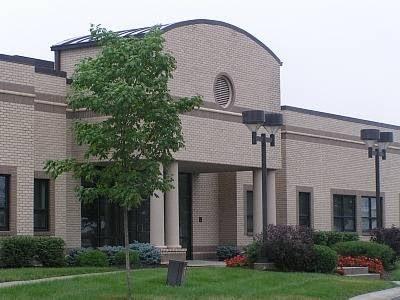


Dr. Anderson, a graduate of St. Louis University, earned his D.D.S at the University of Iowa and his M.S. in Endodontics at the University of Michigan. He graduated from dental school in 1981 and has specialized in endodontics since 1995. His advanced training and state-of-the-art office enable Dr. Anderson to offer you the most effective and painless care possible.
The staff of Keystone Endodontics is experienced and well-trained to provide specialized, personalized endodontic care. Ongoing continuing education, addition of and training in new technology, and annual OSHA/CPR certification insure that you will receive the best possible care.

After obtaining her degree in dental assisting in 1986 from the IU School of Dentistry, Brenda assisted in general dentistry for ten years. She transitioned to endodontic assisting in 1996 and has been working with Dr. Anderson since then. She is highly skilled in all clinical endodontic procedures, is a Certified Dental Assistant, and holds all of the required certifications.

Suprina started her career in dentistry as a general practice chairside assistant in 1995. She transitioned to endodontic assisting in 1998 and has been working with Dr. Anderson since that time. She is highly skilled in all clinical endodontic procedures and holds all of the required certifications.

No. While x-rays will be necessary during your endodontic treatment, we use an advanced non-film computerized system, called digital radiography. It uses a special sensor which significantly reduces radiation levels over film-based dental x-ray systems. These digital images can be optimized, archived, printed and sent to your dentist or other specialists via e-mail. In addition, Dr. Anderson uses an instrument called an 'apex locator'. This microprocessor-based instrument accurately determines canal length electronically. The apex locator replaces the need for some of the traditional x-ray images taken during the procedure.
Medicine has relied on 3D imaging (Computerized Axial Tomography (CAT) scans) for many years, but until recently, dentistry has been limited to 2D imaging. Two-dimensional imaging (intraoral and panoramic radiography) sometimes fails to provide complete and accurate information for complex cases.
The advantage of 3D imaging over regular dental imaging is that bone structure, bone density, internal tooth anatomy and adjacent structures can be viewed clearly in all three planes. This provides highly accurate diagnostic information in a non-invasive manner. Dr. Anderson can visualize internal anatomy, so that proper diagnosis, prognosis, and treatment planning can be done. This diagnostic advancement is why Dr. Anderson was the first endodontist in Indiana to acquire Cone Beam CT technology.
The next step is usually non-surgical endodontic treatment to eliminate the diseased pulp. The injured pulp is removed and the root canal system is thoroughly cleansed and sealed. This therapy involves local anesthesia and may be completed in one or more visits depending on the treatment required and the severity of the pulp's damage. Success for this type of treatment is greater than 90%. We will inform you as soon as possible if we determine that your tooth is not suitable for treatment or the prognosis changes. Most patients return to their usual routine after treatment.
Generally, non-surgical treatment is all that is needed to save teeth with an injured pulp. Occasionally, this non-surgical procedure will not be sufficient to allow healing and we will recommend microsurgery. Surgery allows removal of infected material and sealing of the root at its end. Damaged root surfaces and surrounding bone may also be treated with this procedure. The most common microsurgical procedure used to save damaged teeth is an 'apicoectomy' or 'root-end resection.'
You will be referred back to your general dentist for a final restoration. A record of your treatment will be forwarded to their office. It is unusual for endodontic patients to experience complications after routine endodontic treatment or microsurgery. If a problem does occur, however, we are available to help.
Again, there's no need for concern. We adhere to the most rigorous standards of infection control advocated by OSHA, the Centers for Disease Control and the American Dental Association. We utilize autoclave sterilization and barrier techniques to eliminate any risk of infection. In addition, we use single-use disposable supplies whenever possible.
Although local anesthetic is ideal for most patients, there are additional methods to make your visit even more pleasant. We offer nitrous oxide gas, oral sedation, and I.V. sedation. The oral and I.V sedation will require special arrangements beforehand. Please let us know if you are interested in any of these enhancements. If you only need to be distracted during your treatment, we offer cable TV in each treatment room.
The cost associated with this procedure can vary depending on factors such as how severely the tooth is damaged and which tooth is affected. In general, endodontic treatment is much less expensive than tooth removal and replacement with an artificial tooth. Regardless, we will discuss your particular case and its cost before any treatment is started. We accept cash, check, Carecredit and all major credit cards. We will file to your insurance company if it is available.