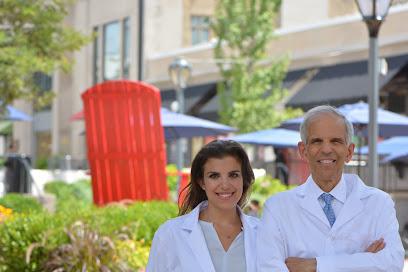


Dr. Greco is a Clinical Professor and Co-Clinical Director in the Department of Orthodontics at the University of Pennsylvania School of Dental Medicine. Dr. Greco is a 1979 dental graduate of The University of Pennsylvania and completed his orthodontic residency at that institution in 1984. He recently completed his 32nd year on the faculty of that institution. He has contributed to two orthodontic textbooks, and authored or co-authored over 80 articles in orthodontic journals.
Dr. Greco is Board Certified by the American Board of Orthodontics (ABO). He served as a Director of that organization between 2002 and 2010, and completed his tenure as President of the ABO in 2010. He remains active within the ABO as an examiner. He also served on the Council of Orthodontic Education from 2002 through 2007 during his tenure on the ABO. He is a Fellow of the American College of Dentists and a Member of the American Society of Dental Ethics. Dr.Greco is also an active member of the Edward H. Angle Society of Orthodontists, a small group of academically interested orthodontists who are active in research within the specialty. He has twice been awarded the Eastern Angle Components Best Paper Award for his research in orthodontics. Dr. Greco is a member of The American Association of Orthodontists, The College of Diplomates of the American Board of Orthodontics, and the American Dental Association. He is Director of the University of Pennsylvania Orthodontic Alumni Society.
Dr. Greco is the attending orthodontist at Thomas Jefferson University Hospital, where he is an Adjunct Instructor in the Department of Oral and Maxillofacial Surgery. Dr. Greco is also a faculty member at Einstein Medical Centers Deparment of Orthodontics. He has lectured nationally on ethics in orthodontics and temporomandibular joint dysfunction and is an Associate Editor of The American Journal of Orthodontics and Dentofacial Orthopedics (AJODO). He authors a monthly column for this journal entitled Ethics in Orthodontics which explores ethical issues facing practicing orthodontists. Please feel free to visit his blog.
Dr. Greco is engaged in private practice in Center City Philadelphia and Ardmore, Pennsylvania. For further details on Dr. Grecos credentials, please refer to his curriculum vitae by clicking on this link.
Dr. Alexandra K. Greco was born and raised in the suburbs of Philadelphia. She attended the Agnes Irwin School and received her BA from Georgetown University where she majored in French with a pre-dental concentration. She earned her Doctor of Dental Surgery (D.D.S.) degree at Columbia University College of Dental Medicine. She then returned to Philadelphia to receive her specialty certificate in Orthodontics and Dentofacial Orthopedics from the University of Pennsylvania School of Dental Medicine.
While at the University of Pennsylvania, Dr. Alexandra was trained in many different forms of orthodontic therapy including traditional orthodontic correction, Invisalign treatment, 3 dimensional imaging and scanning techniques and collaboration in treatment of patients requiring complex jaw surgery. She also completed a rotation in craniofacial orthodontics at the Childrens Hospital of Philadelphia, in which orthodontists collaborate with other medical specialists to treat patients with clefts and other genetic facial abnormalities.
When Dr. Alexandra isnt helping patients achieve the smile they deserve, she enjoys running along the Schuylkill River Trail, cooking classic recipes from tattered family cookbooks and new wave food blogs alike and spending time with friends and family. In the summertime, her favorite place to be is on the beach at Cape May.
Dr. Alexandra is thrilled to return to her roots and join her father in practice. She shares the same emphasis on excellence and compassionate treatment that has made her father successful for more than three decades.
Braces are usually custom-made and are prescribed and designed by the orthodontist according to the problem being treated. Other orthopedic appliances are designed to correct jaw-growth problems. These appliances, which include headgear, bionator, Herbst and maxillary expansion appliances, use carefully directed forces to guide the growth and development of jaws in children and/or teenagers.
Todays braces are generally less noticeable than their predecessors: a metal band with a bracket (the part of the braces that hold the wire) placed around each tooth. Today, the front teeth typically have only the bracket bonded directly to the tooth (instead of surrounding the tooth). This greatly diminishes the old characteristic tin grin.
Generally, those who wear braces need to practice good oral hygiene in much the same way as those who dont. Of course, wearing braces creates unique problems. For example, avoid hard and sticky foods. Dont chew on pens, pencils or fingernails because chewing on hard things can damage the braces, almost ensuring longer-than-needed treatment times and cost. After application of braces, your orthodontist will show you how best to care for your teeth, gums and braces. This includes tips on how often to brush, how often to floss, and, if necessary, other cleaning aids that might help you maintain good dental health.
Overall, orthodontic discomfort is short-lived and easily managed. Most people have some discomfort after their braces are first put on or when adjusted during treatment. After the braces are on, teeth may become sore and may be tender to biting pressures for three to five days. The lips, cheeks and tongue may also become irritated for one to two weeks as they toughen and become accustomed to the surface of the braces.
Playing wind or brass instruments, such as the trumpet, will clearly require some adaptation to braces. With practice and a period of adjustment, braces typically do not interfere with the playing of musical instruments.
Retainers are needed after orthodontic treatment and removal of braces because the teeth can shift out of position if they are not stabilized. Retainers are designed to hold teeth in their corrected, ideal positions until the bones and gums adapt to the treatment changes. Wearing retainers exactly as instructed is the best insurance that the treatment improvements last for a lifetime.
What is a space maintainer? Baby molar teeth, also known as primary molar teeth, hold needed space for permanent teeth that will come in later. When a baby molar tooth is lost, an orthodontic device with a fixed wire is usually put between teeth to hold the space for the permanent tooth, which will come in later.