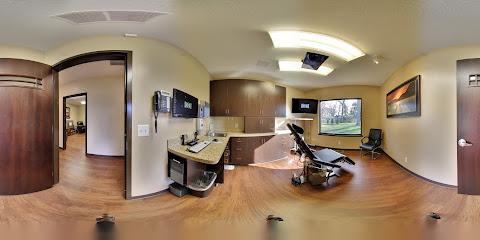


At Granger Oral Surgery & Dental Implants, Dr. Taite Anderson and his highly skilled office and surgical staff work hard to provide every patient with outstanding treatment and surgical care. Our training, expertise, and commitment to patient satisfaction ensure that you will receive the excellent care and results you deserve.
Dr. Anderson has extensive training and experience in a wide range of oral and maxillofacial surgeries including dental implant surgery, wisdom teeth removal, corrective jaw surgeries, and more. On top of his extensive experience, Dr. Anderson constantly advances his education by attending and organizing educational events on the newest developments in the field.
Our surgical staff at Granger Oral Surgery & Dental Implants are experienced, certified oral and maxillofacial surgical assistants who are trained in assisting with intravenous (IV) sedation or outpatient IV general anesthesia. In our state-of-the-art office setting, patients are continuously monitored during and after surgery. Additionally, all of our administrative staff members are well versed in health and insurance policies, certified in CPR, and provide excellent customer service and care for our patients. We also specialize in diagnosing and treating facial injuries and fractures.
Wisdom teeth, also known as third molars, are the last set of molars that grow in the very back of your mouth. It is uncommon for patients to have a large enough mouth to accommodate wisdom teeth without experiencing symptoms that warrant removal. Wisdom teeth oftengrow below the surface of the gums and remain undetectable at an early age. That is why it is important to undergo regular dental exams and proper X-ray evaluation to determine if wisdom teeth are present.
Wisdom teeth removal is relatively common; approximately 85% of wisdom teeth need to be removed to prevent future oral health problems. Impacted teeth can experience issues, such as the growth of cysts and tumors, or may even grow at an angle, directly toward other healthy molars. This angular growth can cause crowding and misalignment of your otherwise healthy teeth.
Some people have one or two wisdom teeth, others grow four or more, and some individuals have no wisdom teeth at all. The best way to know the condition of your wisdom teeth, or if you even have them, is to schedule an evaluation with a dental professional. If your wisdom teeth are positioned in a manner that presents problems, they will be recommended for removal. Wisdom teeth tend to grow in at an angle toward the other molars, which can cause severe pain, lead to oral infection, or cause pathological conditions. When the wisdom tooth is growing in, it can trap plaque and debris, making your teeth more vulnerable to decay or gum disease. The wisdom teeth damage neighboring molars and can harm the jaw bone and important nerves in the face.
While wisdom teeth removal procedures can be performed on adults, it is best to have wisdom teeth extracted during the mid to late teens. By removing wisdom teeth during this period, we can prevent them from disrupting the normal growth and alignment of your healthy teeth. Additionally, the wisdom teeth arent fully formed, and the jaw bone is more forgiving at an early age, making the recovery much more comfortable following treatment. Whether you have partially erupted or fully erupted wisdom teeth, we will gladly schedule you an evaluation to help you determine whether wisdom teeth removal is right for you.
Oral and maxillofacial surgeons are the dental specialists who most commonly remove wisdom teeth. The two main reasons patients often seek specialists for this procedure are experience and anesthesia options. Oral surgeons have specific training and experience in managing both simple and very complex wisdom tooth removal procedures. The training received by oral surgeons also focuses on managing complications that can arise from this type of procedure. Anesthesia for wisdom tooth removal can include local anesthetic or nitrous oxide sedation, but most patients prefer to be completely asleep for this procedure. The extensive training of oral and maxillofacial surgeons allows them to provide these options in a safe and comfortable environment.
Wisdom teeth can be removed using local anesthesia, nitrous oxide sedation, or IV anesthesia to help ease any anxiety the extraction procedure may cause and ensure a pain-free removal. We will discuss your anesthesia options and their benefits and risks with you before your procedure to help you select the sedation option that best suits your needs.
If you have your wisdom teeth removed at Granger Oral Surgery & Dental Implants in Granger, IN, Dr. Anderson will review your medical and dental history and take X-rays or 3D scans if necessary that will reveal the position, length, and shape of your wisdom teeth. We want you to understand and experience optimal recovery from your treatment. It is our goal to ensure that you are fully informed and at ease moving forward with your treatment.
If your wisdom teeth have not fully grown in, removal requires an incision into the gums and removal of a small piece of bone to expose the wisdom tooth. The tooth will then be extracted in smaller portions to minimize the amount of bone that is removed.
Many oral and maxillofacial surgeons are busy members of most emergency room trauma teams, which allows them to help assess and treat cases of facial trauma that occur in their area. In fact, over three million facial trauma cases are treated each year by oral and maxillofacial surgeons all over the United States.
Oral and maxillofacial surgeons are required to undergo and complete extensive specialty training to treat and repair disharmonies of the facial skeleton and mouth. To become an oral and maxillofacial surgeon, Dr. Taite Anderson completed years of comprehensive surgical training in addition to earning a dental degree. The hands-on experience oral surgeons receive during their surgical residencies enhances the acute skill set required to restore facial aesthetics and proportions. They also learn methods for correcting the functionality of the jaw and replacing missing or damaged teeth.
Facial injuries are very serious, and no two facial injuries are the same. Facial trauma can result in long-term functional and cosmetic problems, which is why it is so important that a qualified surgeon treats the facial trauma.
Just as no two facial traumas are the same, no two facial trauma surgeries will be the same. The type of injury sustained, the severity of that injury, and the specific area of the face that is affected will determine what kind of procedure must be performed. In some cases, multiple treatments are required to fully restore the function and appearance of the face and mouth.
What is considered to be a minor injury, such as a facial laceration or an avulsed tooth, may only require the placement of sutures or a tooth restoration, such as a dental implant. The best and most natural-looking replacement for avulsed teeth is a dental implant. Serious injuries, like a facial fracture or a jaw fracture, may involve a more complex procedure and require more than one treatment. Regardless of the severity or type of injury, it is extremely important to have facial trauma cases treated quickly and efficiently. Immediate treatment ensures that the mouth and face are restored properly and do not develop long-term complications. If the patient does not seek immediate treatment, they are at risk for long-term problems such as jaw misalignment, the development of TMJ disorder, or jaw bone deterioration.
If you or a loved one experiences a facial trauma, Dr. Anderson is available to treat your facial or dental injury at our office in Granger, IN. In cases of emergency, our staff will work to see you and start your treatment plan as soon as possible. Dr. Anderson and his highly trained, compassionate surgical team will assist you and work diligently to restore the natural look and function of your face and mouth.