

Dr. Kickertz grew up in Rockford, IL. She graduated with a B.S. in Health Sciences from Purdue University and completed her D.D.S. degree from Indiana University School of Dentistry. Dr. Kickertz worked as a general dentist for four years prior to specializing in endodontics. She completed her certificate in endodontics and M.S. in 2018 from the University of Minnesota.
Dr. Kickertz also worked as an endodontist in the Minneapolis metro area for two years prior to relocating to Maryland. She is a board-eligible endodontist and working to complete her board certification.

Dr. Zuaitar earned his undergraduate degree in Baghdad, Iraq. His dental training was accomplished through the University of Baghdad School of Dentistry in 2005. He then graduated from New York University with his graduate dental degree in 2014. Along with the aforementioned achievements, Dr. Zuaitar has a Certificate of Advanced Graduate Studies (CAGS) through Boston University in 2019.
Some of Dr. Zuaitars professional interests are endodontics and microsurgery. He enjoys helping patients and finding them relief to their pain. He also enjoys helping patients to achieve a healthier state in general. The artistic side of dentistry, especially in endodontics are also part of what Dr. Zuaitar enjoys most.
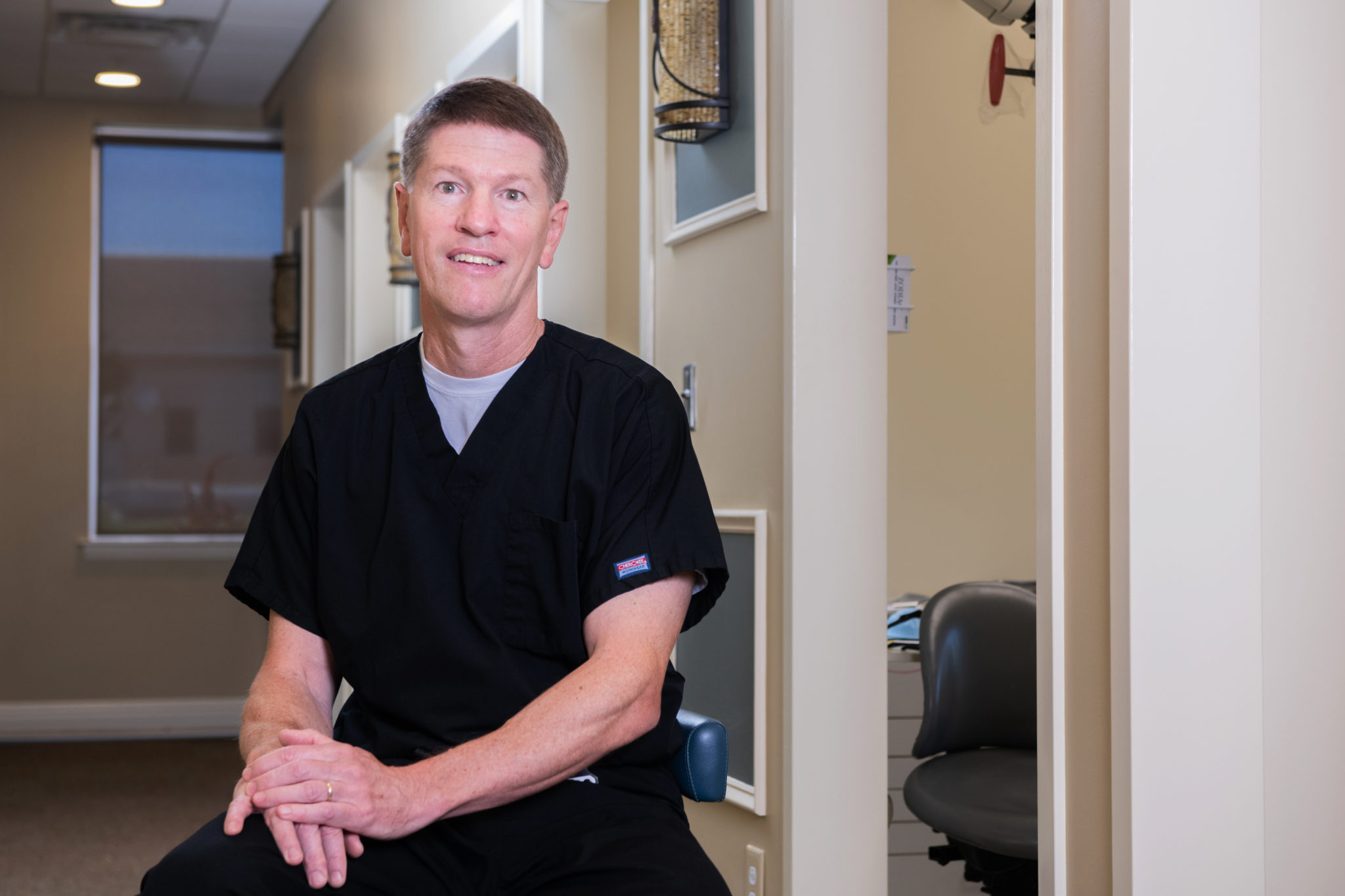
Dr. Parsons is a native of Maryland and attended Thomas S. Wootton High school in Rockville. He received his Bachelor of Science degree in Biology from the University of Maryland in College Park. Following his undergraduate education, he attended the University of Maryland Dental School in 1992 where he received his Doctor of Dental Surgery degree and the Irvin I. Abramson award for outstanding skill and expertise in endodontic diagnosis and treatment. While there, he was also a member of the Gamma Pi Delta and Gorgas Honor Societies. After completing a General Practice Residency in Dental Medicine at Monmouth Medical Center in Long Branch, New Jersey, he received his specialty training and Certificate in Endodontics at the University of Maryland Dental School.
Dr. Parsons is a member of the Frederick County Dental Society for which he has served as president. He is also an active member of the American Dental Association, Maryland State Dental Association, and American Association of Endodontists. As an endodontist, he utilizes state-of-the-art technology and equipment, including the use of a surgical microscope, in order to provide the highest quality of care. He enjoys spending his free time hiking and doing other outdoor activities with his wife and three children.
What is an endodontist, and what do they do? Endodontists are dentists who specialize in maintaining teeth through endodontic therapy procedures involving the soft inner tissue of the teeth, called the pulp. The word endodontic comes from endo meaning inside and odont meaning tooth.
How much additional training do endodontists have? In addition to dental school, endodontists receive two or more years of advanced education in this kind of treatment. They study root canal techniques and procedures in greater depth for diagnosis and treatment of more difficult cases. For this reason, many dentists choose to refer their patients to endodontists.
What is endodontic therapy? A local anesthetic will be given. A sheet of latex called the rubber dam (non-latex available) will be placed around the tooth to isolate it, keeping it clean and dry during treatment. The treatment consists of three or four basic steps, but the number of visits will depend on your particular case. Most treatments require only a single visit. In any case, it depends on the degree of infection/inflammation and degree of treatment difficulty.
Root canal treatment, or endodontic therapy, have a very high degree of success. Most studies place success rates well above 90%. We will discuss with you the chances of success before any endodontic procedure to help you make an informed decision.
Why am I experiencing pain in other areas? Oral pain such as toothaches or cracked/fractured teeth can often be difficult to pinpoint. Because of the vast network of nerves in the mouth, the pain of a damaged or diseased tooth is often felt in another tooth and/or in the head, neck, or ear. An endodontist specializes in diagnosing and treating this type of referred pain.
What if Ive sustained a traumatic mouth injury? Pulp damage is sometimes caused by an injury to the mouth, and the endodontist specializes in treating these traumatic injuries. For example, an injury to a childs permanent tooth that is not fully developed can cause the root to stop growing. A procedure called apexification stimulates bone to be deposited at the end of the root, which makes it possible to then save the tooth through a root canal procedure. An endodontist is specially trained in procedures for replanting teeth that have been knocked out of their sockets.
Will I need to return to your office for additional visits? Once endodontic therapy is completed, your tooth should be examined periodically (usually every 6 12 months). This allows us to ensure that the tooth has healed or is healing properly. You will be sent a notice in the mail when we feel it is appropriate to reevaluate the area. Since an abscess may take 2 years to heal, our office will reevaluate the tooth for at least 2 years.
What is a retreatment? Occasionally a tooth that has undergone endodontic treatment fails to heal, or the pain persists despite therapy. Although rare, sometimes a tooth initially responds to root canal therapy but becomes painful or diseased months or years later. When either of these situations occur, the tooth often can be maintained with a second endodontic treatment.
What is endodontic surgery (Apicoectomy)? In this procedure, the endodontist opens the gum tissue near the tooth to see the underlying bone and to remove any inflamed or infected tissue. The very end of the root is also removed. A small filling may be placed in the root to seal the end of the root canal, and a few stitches or sutures are placed in the gingiva to help the tissue heal properly.
Reason 3: Availability Most endodontists offer tremendous flexibility in accommodating emergency cases, so delays in treatment are kept to a minimum and patients can be relieved of dental pain quickly.
Reason 4: Advanced Technology Many endodontists use state-of-the-art technology such as operating microscopes, digital imaging, ultrasonic instrumentation and fiber optics, to treat their patients quickly and comfortably.
Your tooth consists of two main parts: the crown, which is that part of the tooth above the gum and visible in your mouth; and the root or roots, which is that part of the tooth that lies beneath the gum and is surrounded by bone. Inside each root is a channel that runs the length of the tooth. This channel is the root canal and contains the pulp (nerves, blood vessels, and soft tissue), which is often referred to as the nerve of the tooth.
The pulp may be irreversibly damaged by bacteria associated with decay, very deep restorations, fractures, trauma, or periodontal disease. In order to preserve a tooth in which this has occurred, it is necessary to remove the diseased pulp tissue. This procedure is known as root canal treatment or endodontic therapy. Since endodontic therapy is concerned with removing only the pulp from the root canal, the root will continue to function normally because the supporting tissues remain intact. It is advisable to remove the injured pulp because it may become infected or act as an irritant to the tissues surrounding the tooth.