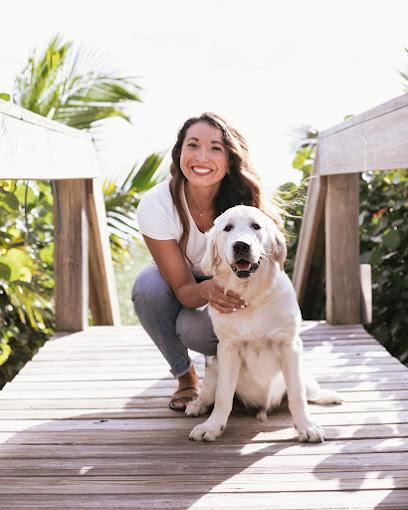


She attended Florida State University where she earned a bachelors degree in exercise science, graduating cum laude in 2014. Dr. Zoey was driven to become an orthodontist because she is intrigued with the fusion of scientific concepts and artistic expression to treat patients and create beautiful smiles. Following FSU, she continued her quest to become an orthodontist by moving to San Francisco to attend University of the Pacific Dental School, where she earned her Doctor of Dental Surgery degree. While at dental school she was inducted into Tau Kappa Omega Honor Society for her achievements in scholarship, service and character. This is where she met her now husband Dr. Andrew Nickel.
Dr. Zoey was then accepted as one of six residents into the highly competitive orthodontic residency at the University of Southern California. After three years studying and practicing orthodontics at USC she earned her Masters Degree in Craniofacial Biology in addition to her Certificate in Orthodontics. During her tenure at USC, she worked closely with a host of world-renowned orthodontists including the founders cutting edge technologies such as Invisalign and Inbrace. Following residency, Dr. Zoey took the additional step in her education and became a diplomate of the American Board of Orthodontics for her commitment to quality and excellent care in orthodontics.
The improvement in a patients self-confidence, brought about by the transformation of a patients smile is what drives Dr. Zoey. She takes pride in shaping more than just smiles, but yet molding a patients smile to fit their facial esthetic and functional needs. Dr. Zoey is highly trained in the growth and development of the jaws and face in children and adolescents. She has extensive experience treating kids, teens, and adults with Invisalign as well as fixed braces. With Invisalign technologies she is able to use her extensive training of the product to design efficient treatment to produce superior results. Dr. Zoey also provides interdisciplinary orthodontic care for their patients, by working with restorative dentists to create a proper bite and improve tooth positioning for replacement of missing teeth.
In her free time she enjoys spending time with family, friends, her Golden Retriever Samo, surfing, snowboarding, and any time spent in the ocean. She recently married her dental school sweetheart, Dr. Andrew Nickel, a pediatric dentist on the Treasure Coast.
No. All orthodontists must be licensed to practice, but at this time only 1 in 3 orthodontists have continued on to become a board certified orthodontist. The American Board of Orthodontics (ABO) certification process signifies a unique achievementa significant step beyond the two to three years of advanced education required for a dentist to become a specialist in orthodontics. The process requires the orthodontist to demonstrate actual accomplishments in patient care with detailed case reports on the treatment provided for a broad range of patient problems. Board certification is a voluntary achievement that all orthodontists do not choose to pursue. In order to become board certified by the ABO, an individual orthodontist is thoroughly interviewed by a highly respected panel of examiners to demonstrate their orthodontic knowledge, clinical skills and judgment.
One. The American Board of Orthodontics (ABO) is the only certifying board in the specialty that is recognized by the American Dental Association. The ABO was founded in 1929 and is the oldest specialty board in dentistry. The boards purpose is to elevate the quality of orthodontic care for the public by promoting excellence through certification, education and professional collaboration.
Successful completion of the examination process demonstrates the orthodontists highest commitment to excellence in orthodontics to both the orthodontic profession and the general public. It represents a commitment by a licensed specialist that he/she has the necessary knowledge base and skills to treat patients to the highest of standards. It exemplifies a practitioners commitment to continue to keep abreast of the latest advances in patient care, and to continue to deliver these latest advances to patients. Many orthodontists see it as a demonstration of their dedication to the specialty and the highest level of personal achievement.

Since the establishment of the ABO in 1929, the certification process requirements have continued to adjust to the demands of the specialty. Today, the process involves a thorough Written Examination (240 questions) covering all areas of information which an orthodontist should be knowledgeable. Successful completion of this board exam allows the orthodontist to proceed to the Clinical Examination where they present detailed case reports from their practice/residency, demonstrating a history of excellence in patient care. These cases are evaluated by a panel of examiners and later discussed during an oral examination where the applicant is tested on a wide variety of academic and clinical topics. After successful completion of these examinations, the orthodontist has officially achieved Board Certification, for a time-limited period. The orthodontist must go through Certification Renewal every 10 years to maintain their certification status by demonstrating this continued level of patient care.
Looking for an orthodontist near me in Sebastian, FL? Orthodontist Dr. Zoey Gutierrez-Nickel at Dr. Zoey Orthodontics specializes in state-of-the-art braces, metal braces, clear braces, ceramic braces, iTero digital impressions, and Invisalign. We also offer early orthodontic treatment for children, and full orthodontic treatment for teens, and adult orthodontics. When considering your investment which includes the cost of braces, the cost of Invisalign, and the time it takes to create your new smile, you cant put a price tag on a life-changing appearance which improves your long term dental health.
Its more important than ever to brush and floss regularly when you have braces, so the teeth and gums are healthy during orthodontic treatment. Patients who do not keep their teeth clean may require more frequent visits to the dentist for a professional cleaning. Adults who have a history of gum disease should also see a periodontist during orthodontic treatment. Watch the two videos below on the proper care of braces during orthodontic treatment.
What can you eat? Lets talk about what you shouldnt eat! For the first day or so, stick to soft foods. Avoid tough meats, hard breads, and raw vegetables. Before long, youll be able to bite a cucumber again. But youll need to protect your orthodontic appliances when you eat for as long as youre wearing braces.
When you get your braces on, you may feel general soreness in your mouth and teeth may be tender to biting pressures for 3 5 days. Take Tylenol or whatever you normally take for headache or discomfort. The lips, cheeks and tongue may also become irritated for one to two weeks as they toughen and become accustomed to the braces. We will supply wax to put on the braces in irritated areas to lessen discomfort.
To successfully complete orthodontic treatment, the patient must work together with the orthodontist. The teeth and jaws can only move toward their corrected positions if the patient consistently wears the rubber bands or other appliances as prescribed. Lack of cooperation following instructions and damaged appliances lengthen the treatment time so please follow instructions.