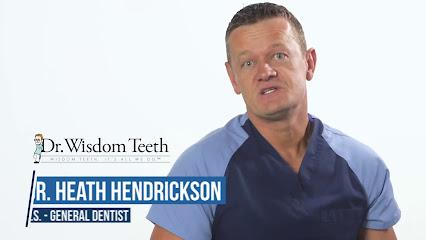


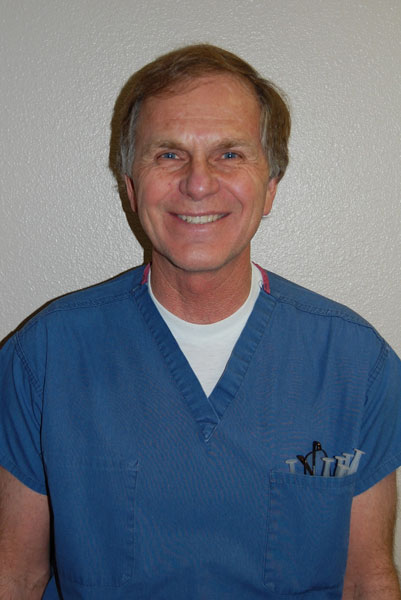
Michael Call has been with us for 13 years and has been performing anesthesia services for 45 years. Dr. Hendrickson is certified to provide Iv sedation to his patients; however, to improve safety and quality, Mike Call has become an integral part of our team. While most oral surgeons prefer to perform their own anesthesia services, all of Dr. Heath Hendricksons anesthesia is administered by Michael Call, CRNA. As anesthesia specialists, CRNAs provide anesthesia care for patients before, during, and after surgical procedures. They administer medications to keep patients asleep or pain-free during surgery and constantly monitor every important function of the patients body. Mike Call was trained at the Mayo Clinic and has sedated over 100,000 patients during his long and successful career. He has performed over 35,000 safe, successful sedations alongside Dr. Hendrickson. Wouldnt you rather be under the care of two professionals rather than one when it comes to the safety of you or your loved one? As a team, Dr. [doctor_name] and Michael Call can provide you the expertise, professionalism, and safety you are looking for! And our unbelievably low price includes the services of both!.
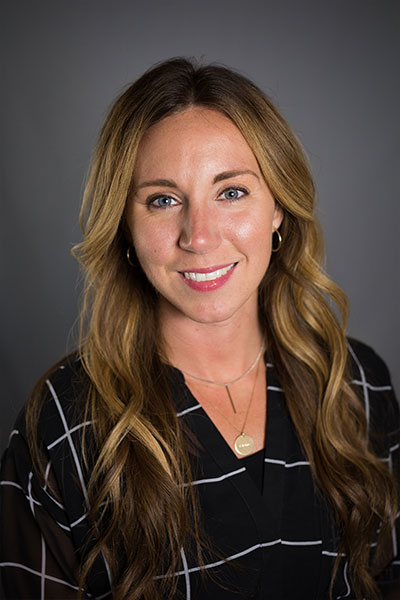
Hollis has worked alongside Dr. Hendrickson since 2008. Her passion is two-fold: interacting with patients and making sure that Wisdom Teeth Only remains the top choice for wisdom teeth removal for parents and families in Utah! Originally from Virginia Beach, Virginia, Hollis moved to Utah in 2006. She lives in American Fork with her husband Jeremy and their 3 children, Swayze, Wesley, and Emmett. She enjoys feeling good through exercise and staying active, being out in the sun, watching her daughters dance and her son play soccer.

Bobbi Jo has been a team member since 2014. She is trained in all areas of the practice, utilizing her skills in both front office and surgical duties. But, her passion is in surgery! She lives in Layton with her husband and 9 children. Thats right, 9 children! When she is not working, Bobbi enjoys spending time with her family and playing softball.

Stacie graduated from UVU with a bachelors degree in public health. Stacie plays an important role in our patient care, as she is right by each patients side to help them feel comfortable following their surgery. She grew up in Orem and now lives in Riverdale with her husband, who proudly serves our country in the National Guard. She enjoys going o the movies and playing all sports, especially tennis and pickleball.
The last teeth to come in man are molars called wisdom-teeth, which come at the age of twenty years, in the case of both sexes. Cases have been known in women upwards of eighty years old where at the very close of life the wisdom-teeth have come up, causing great pain in their coming; and cases have been known of the like phenomenon in men too. This happens, when it does happen, in the case of people where the wisdom-teeth have not come up in early years.
-No, although 4 is the most common number (one in each corner of the mouth); some people have 1, 2 or 3 wisdom teeth and some people dont have any at all! In rare cases people develop additional teeth in the area of the wisdom teeth call para-molars and may have 5 or more!
-Third molars helped our human ancestors to grind plant tissue during a time when leafy greens were a more important part of our diet. It is thought that the skulls of our ancestors had larger jaws with more room to accommodate more teeth which helped them to chew foliage more efficiently. This was important because humans lack the ability to efficiently digest cellulose, an important part of plant cell walls. Since the advent of agriculture, almost 10,000 years ago, our diets have become softer and include a larger amount of sugar and high energy foods. These diets have resulted in smaller jaws and not enough room for the wisdom teeth. So when they begin to erupt, they are often painful or crooked and do not fit properly in the mouth. Their removal becomes mandatory for a healthy mouth.
-Your [dr_type] will classify a tooth by the degree to which it has been able to grow out of your jaw bone. If a tooth remains trapped in the bone, usually by a lack of space or close proximity to other teeth, the tooth is considered to be impacted. If your wisdom teeth are impacted and need to be removed, you will experience some degree of swelling around the lower wisdom teeth. Sometimes patients refer to this as the chipmunk effect because after surgery you look like you are packing nuts in your cheeks like a chipmunk!
-This is always a hard question to answer, simply because we cant see into the future. However, if an X-ray indicates that there is inadequate room for the wisdom teeth to develop, then a few criteria may indicate the ideal time to remove the wisdom teeth. Your [dr_type] will help you decide when the time is right.
-A dry socket (local alveolar osteitis) occurs when the clot is lost from the hole left in the jaw after a wisdom tooth is extracted. It generally results in a dull, uncomfortable ache. It is easily treated in the office where you had your wisdom teeth removed.
We are excited to provide you with a state of the art procedure called PRF to reduce your chances of dry socket from 1 in 10 to 1 in 100! We offer this procedure at no charge to you! After placing your IV, we will draw a small amount of blood. That blood will be put into a centrifuge and spun very fast until it separates into distinct layers. One of the layers, the PRF layer contains numerous white blood cells, neutrophils and other key components of healing. This portion of your blood will be put back into the socket to stimulate bone growth and healing, reduce pain and dramatically reduce your chance of dry socket. We see very few dry sockets in our practice!
At [practice_name], we provide excellent service at an exceptional value. Our [dr_type] offers competitive prices for patients with and without insurance. We invite you to browse through our price comparisons below to see how Dr. [doctor_name] can save you money. And if you have any questions on insurance pricing, call any of our wisdom teeth offices in [city], Layton or Midvale, [state].
