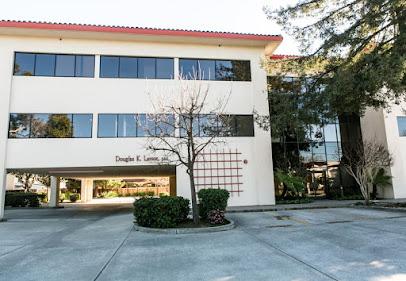


Doctor Larsons dental office is in Campbell, California. The office design helps patients be at ease before, during, and after treatment. It is located between San Jose and Los Gatos on Campbell Avenue.
Your smile is special, and it provides a glimpse into your unique personality and, accordingly, merits exceptional care. At The Smile Specialists, we provide that care, offering exceptional expertise and innovative dental treatments. We strive to ensure that your teeth remain healthy and attractive; smiles are our specialty.
We welcome new patients. We will review your medical and dental history during your first visit, examine your gums, and take a complete set of digital radiographs. We will become acquainted with you and your ideal vision for your teeth, and we will then collaborate to develop the optimal treatment plan.


Dr. Larson graduated from Loma Linda University in 1982. Since then, he has managed a cutting-edge dental practice in the South Bay while lecturing and conducting research on restorative and cosmetic dentistry.
Interested in cosmetic dentistry, Dr. Larson incorporated it into his practice in the early 80s, learning the newest cosmetic techniques. Bleaching & Veneers were in development. Being invited to be president of the Academy of Cosmetic & Adhesive Dentistry allowed him to meet and learn from the developers and innovators of the time.

Since grade school, Danelle has loved dentistry. Making people feel healthy and happy is very important to her. She enjoys the beach, music, and cooking while spending time with family and friends. She also enjoys sci-fi and loves all things Star Wars. Disneyland is her new happy place to be with her 6 and 8-year-old boys who keep her days busy.

Jen began her journey in the dental field as a Registered Dental Assistant and continued her education in dental hygiene at Foothill Colledge. She has worked in dentistry for 18 years. During that time, she has enjoyed working closely with many individuals strategizing unique methods to help accomplish their personal oral hygiene goals and attain the confidence to maintain a healthy dental routine continuously. Jen advocates for simplified solutions to common challenges in daily home care practices. Her greatest reward is receiving positive feedback from patients who have achieved success in improving their overall wellness due to her recommendations.
Jen spends most of her spare time with her husband, Kevin of 11 years, and two furry children, Stitch (12years) and Stella (10 years), who are both very silly and entertaining French Bulldogs. Her love of food culture and trying her excitement only surpasses new, unique concoctions for experiencing the Hawaiian Islands whenever the opportunity arises.


Jennifer has been a Registered Dental Assistant for over 30 years. She loves cosmetic and restorative dentistry the best. Originally from Arizona, where her beautiful 21-year-old daughter attends university.
She now lives here with her fiance, Jeff, and her best friend (Charlie, her dog, a miniature pinscher). She says, We enjoy long rides on our Harley & weekend shopping at the local farmers markets where she gathers ingredients for her newest recipes. Cant beat the weather in California!

Veronica has been married to Eduardo for 28 years, and they have three beautiful children together. Yara lives in Idaho with her husband Andrew, Victoria attends CSU Monterey Bay, and Daniel starts his first year at West Valley. Proud of where life has taken them, she is looking forward to being an empty nester.

Yara is the schedule coordinator. She has now been a part of the front office for a year but also worked here some summers while in high school. She is also currently going to college. Yara Enjoys learning new things about dentistry every day.
In her free time, she enjoys working out and spending time with her family and friends. She loves Disneyland and anything Disney. Her goal is to be able to go to all six Disneylands. Yara is looking forward to traveling to new places soon.

Victoria is currently attending CSU Monterey Bay and looking forward to graduation within the following year. She is receiving a degree in Liberal Studies with a minor in Human Development, and she plans to become a bilingual kindergarten teacher.
She enjoys the outdoors during her free time: hiking, camping, or just spending time at the beach. She also loves spending time with her dog, Moose. She is currently training him to pass the Canine Good Citizen test and is introducing scent work.
Does your smile reveal chipped or irregularly shaped teeth? Tooth reshaping is a simple procedure often used to correct minor flaws and problems where the teeth are chipped or oddly shaped. Reshaping will smooth irregular edges and improving odd angles can provide large improvements in your smile. Even subtle changes, to the length, shape, or position of teeth can improve your smile!
Because some tooth enamel will be sacrificed during the process, your dentist may elect to take an x-ray to determine the size and location of the tooths pulp. The dentist may mark the tooth before removing a tiny amount of surface enamel with a handpiece. In addition to the handpiece, abrasive strips can remove the enamel on the sides of the teeth before they are smoothed and polished.
Gum recontouring is a procedure used to reduce the tissue around the teeth or help level a canted smile. These procedures provide a more robust change versus tooth reshaping, and alterationsions in length can dramatically improve ones smile. Making you smile pop.


Dental implants provide anchorage for a single tooth, several teeth, or a mouthful of teeth. Dental implants, whether replacing a single tooth or multiple teeth consist of three separate pieces, each fulfilling a unique role in the process.
An implant is a titanium post surgically placed in the jawbone. Once placed there, it will require three to six months to heal. It then becomes an immovable base upon which the two other components, the abutment, and the prosthesis or crown, will be placed. The abutment attaches to the portion of the implant. It forms a platform that secures the crown.
Unlike a crown, which covers the entire tooth, a veneer is a thin covering that is placed over the front (visible) part of the tooth. The dentist applies veneers in a simple, comfortable procedure that takes just a few visits.
Veneers are a popular treatment option for several reasons. Veneers generally are placed on upper front teeth that are severely discolored, poorly shaped or slightly crooked. Veneers may be used to lighten front teeth that are naturally yellow or have a gray cast and cant be whitened by bleaching.
are extremely thin shells made of a strong and durable dental ceramic. The dentist removes a small amount of enamel from the front and sides of the tooth. This makes room for the veneers and prevents the restored tooth from feeling or looking bulky or unnatural. Next, the dentist makes an impression of the prepared teeth so that the shape of the preparations and surrounding teeth can be replicated in the dental laboratory.
The dentist also looks for the shade that will best match or blend with the other teeth. The impressions are sent to a dental laboratory that makes the ceramic veneers to fit your individual teeth. This may take several days.
Ceramic veneers have a smooth translucent surface that provides a very natural appearance. They are more resistant to staining that composite veneers but may require more visits to complete. Ceramic veneers generally are more expensive because they involve custom impressions in the dental office and custom fabrication by a dental laboratory technician. The procedure for ceramic veneers can require the removal of more tooth enamel than that for composite veneers.
Teeth must be healthy and free of decay and active periodontal disease. Your dentist can treat these conditions before a veneer is made. Veneers typically require less removal of tooth enamel than crowns. However, the process is not reversible once the enamel is removed.
Patients who clench or grind their teeth are not good candidates for veneers, because the thin veneers may chip or break. If you clench or grind, your dentist may suggest a plastic dental nightguard to be worn while sleeping, which can help minimize stress on the teeth.
Because veneers are somewhat brittle, they might chip or peel. Avoid biting your fingernails and chewing on hard objects, such as pencils or ice. Like any dental restoration, it is possible, over time and with wear, for veneers to dislodge. In that case new ones may be needed.


Consuming foods that stain or drinking dark beverages will darken your teeth is a life long process. The solution for a brighter smile is bleaching your teeth. Dr. Larson has completed countless bleach cases, both in-office and home bleaching trays. Using this data the best method for most people is at home bleaching.
In-office bleaching is not as effective and involves a more complicated process than at-home bleaching. At-home bleaching allows the patient to bleach as quickly or slowly as needed. Your teeth will continue to darken and need to be touched-up six months or six years latter you have everything you need.


Most patients are unaware that they are grinding or bruxing their teeth because it usually happens while they sleep. Some people may wake with a headache, toothache, or a sore face. In addition to causing discomfort, grinding can wear away or fracture tooth enamel and dentin. But the most significant concern is losing the tooth-supporting bone.
Bruxism can develop at any age; children, as well as adults, can grind their teeth. Although the causes of bruxism are unknown, several factors seem to be involved. Stressful situations, problems sleeping, an abnormal bite, and crooked or missing teeth may be responsible.
Regular dental checkups are essential to detect damage in the early stages. Your dentist can diagnose and treat irregular wear on teeth and determine the source of facial pain that may result from bruxism.
Based on your dentists diagnosis, one or more treatments may be recommended. The dentist may suggest using a nightguard worn while sleeping. Custom-made by the dentist from soft inner and hard outer material to fit your teeth, the night guard slips over teeth and prevents abnormal contact between them. In addition to providing cushioning, the night guard relieves clenching, damaging jaw joints.
An abnormal bite in which teeth do not fit well together may lead to grinding, and treatment may involve reducing the high spots on one or more teeth. For severe cases, your dentist may suggest reshaping or reconstructing the biting surfaces of the teeth.
Grinding is prevalent. Dr. Larson observed a dramatic increase in clenching and grinding after the Covid pandemic. If you suspect that you are routinely grinding your teeth, see your dentist about protecting your smile.


The length of the process depends on the patients specific situation and the results the patient wants to achieve. Aligners are clear, and most people wont even know youre wearing them. Comfortable, removable, hygienic, and convenient.
The cost of AOA will vary from patient to patient, depending on the treatment thats needed, and is generally comparable to the cost of traditional braces. However, doctors will set their own charges for treatment and we do not provide specific cost information.
Yes. Orthodontists and dentists have been using invisible orthodontics to straighten teeth for decades. Hundreds of thousands of patients have been successfully treated with invisible orthodontic technology.
Never underestimate the power of a nice smile. A nice smile is not only beautiful, it also promotes good health:Teeth that are straight and evenly spaced are easier to keep clean, leading to better oral health. Better oral health can reduce the incidence of heart disease, gastrointestinal disease, and other health conditions.Teeth that are properly aligned chew more efficiently, and that aids in proper digestionTeeth that are straight and properly aligned create a more perfect bite, and that avoids excessive stress, headaches, and strain on your supporting bone and tissue.
AOA uses proprietary technology to produce aligners customized for each patients teeth. The patient wears one set of aligners for three weeks and then moves to another set if necessary. By the end of treatment, the teeth have will have moved from an untreated to a treated, beautiful smile.
AOA has a number of important benefits: AOA aligners are so clear, theyre almost invisible. So no one will know youre straightening your teeth, unless you tell them.AOAs customized aligners are more comfortable than other forms of orthodontic treatment. There are no wires to tighten and no braces to scrape against the inside of your mouth.AOA is removable, so you can floss and brush your teeth normally during treatment.
Aligners are clear, polymer appliances that are almost completely transparent. Some patients have commented that aligners look similar to tooth whitening trays, others think of them as contact lenses for your teeth.
The AOA System is a series of clear, removable, plastic aligners. Because the aligners are clear, AOA is sometimes referred to as invisible braces or clear braces. With AOA, there are no fixed orthodontic appliances.
The technology behind invisible orthodontics has been on the market for decades. AOA has developed an advanced system of invisible orthodontics that has unique aesthetic and hygienic benefits. Many orthodontists and dentists consider the AOA product to be the next generation in invisible orthodontics.
The concept behind AOA dates back to 1945 when it was first envisioned that a series of tooth positioners could achieve the same movements that most people thought were only achievable with metal braces. With AOA, this is now possible.
As with traditional braces, treatment times vary depending on the patient and how much movement is required. However, treatment time is generally about the same as traditional braces, between 9 and 18 months. Often patients find that treatment with aligners is faster than treatment with braces.
Your doctor will provide retainers to help prevent your teeth from moving again after treatment. A retainer may be a clear, plastic aligner similar to the AOA aligners, or may be a permanent retainer attached to the inside surface of your teeth. We recommend that you discuss the possibilities with your orthodontist or dentist, as each patients treatment will vary.
For some people there will be temporary discomfort at the beginning of each stage of treatment. This means that AOA is effectively moving your teeth. Any discomfort typically lasts only a couple of days, and is at the beginning of each stage of treatment.