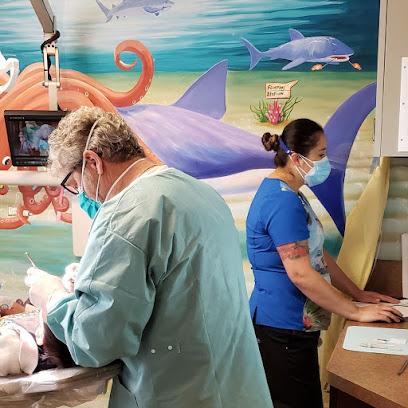


Dr. Rick and our entire staff are dedicated to giving you the smile that youve been dreaming of and we guarantee that you can receive responsive and compassionate dental care. We take the time to address all of your concerns until you feel fully assured. We want you to feel relaxed, comfortable, and safe when you are in our care, which is why our team strives to treat you like family.
At Children's Dentistry of Santa Maria, our philosophy is to create strong, long-lasting relationships with our patients thats based on trust and top quality dental care. We do everything we can to provide extraordinary dental services and remarkable results!

Dr. Henry Arakaki earned his DDS degree in 1999 from the University of the Pacific of Dentistry in San Francisco, CA. Dr. Arakaki also completed a one year residence in 2000 for General Practice Dentistry at University Medical Centers in Fresno, CA. Dr. Arakaki was given a Fellowship in 2006 by the Academy of General Denistry.
Dr. Arakaki is Past President of the Central Coast Dental Association, and member of California Dental Association, American Dental Association, California Society of Pediatric Dentists, and Academy of General Dentistry.


The grown-ups in your life want you to have a healthy, happy smile. Thats why they help you brush and floss, and make sure you come see Dr. Kleinsasser or Dr. Arakaki for checkups and cleanings. Did you ever wonder if there are other ways you can help build a beautiful smile? There are! And one of them is eating food that makes our teeth and gums strong and healthy. Friendly Foods Enamel and Bone Builders - Calcium is a very important element that helps us grow strong bones and enamel, the hard covering on the outside of our teeth. Bacteria in our mouths can create acids that weaken enamel and lead to cavities, so we want to keep our enamel as strong as possible. Dairy products like milk, cheese, and yogurt are great sources of calcium, but you might be surprised to know dark green vegetables like kale, spinach and broccoli help build strong teeth as well, and strong teeth are less likely to get cavities! Good for Our Gums - Many foods have important vitamins that help keep our gums and mouths healthy. Vitamin C helps protect our gums and make them stronger. When we think of Vitamin C, we usually think of citrus fruits like oranges and lemons, but there are many other fruits and vegetables that give us this important vitamin, including mangos, potatoes, and strawberries. Vitamin A also helps keep our gums healthy. We can increase our Vitamin A by adding fish, leafy green vegetables, or orange colored foods to our diet. Natural Toothbrushes - Crunchy foods like apples, carrots, and celery can help keep our teeth clean. They act like gentle brushes to remove food and bacteria left on our teeth after eating. Chewing also increases saliva, which helps wash away food particles and bacteria. And, of course, drinking or rinsing with water after a snack helps clean our teeth when we cant brush.

Pediatric dentists strive to make your childrens visits welcoming and worry-free, and, we want the same for you! Ask us about any questions you might have. We are happy to explain procedures, equipment, and sedation options so you know just how safe and comfortable your childs experience can be. And if X-rays are a concern, we can put your mind at ease here as well. What Exactly Are X-rays? Sometimes parents feel reluctant about the process of imaging because X-rays are a kind of radiation. But the fact is, radiation is all around us. We are exposed to radiation naturally from our soil and water, sun and air, as well as from modern inventions such as cell phones, Wi-Fi, and air travel. Why is radiation so common? Because matter throughout the universe constantly gives off energy, and the energy that is emitted is termed radiation. This radiation takes two formsas particles (which we dont need to consider!) and as traveling rays. This second type is known as electromagnetic radiation, created by photons traveling in regular waves at the speed of light. We are exposed to electromagnetic radiation every day, because, whether we can see them or not, these different wavelengths and frequencies create various forms of light. Radio waves, microwaves, infrared, visible, and ultraviolet light, X-rays, and gamma rays are all part of the electromagnetic light spectrum. Different types of radiation on this spectrum have different wavelengths and different frequencies, and produce different amounts of energy. Longer wavelengths mean lower frequencies and less energy. Because X-rays have shorter wavelengths and higher frequencies than, for example, radio waves and visible light, they have more energy.

Sometimes the reason for a poor nights sleep is obvious. Maybe your child watched a scary movie. Or loaded up on sugar before bed. Or cant get to sleep after a night of computer screens or video games. Not much we can do about these problems. Sometimes, though, the cause of your childs sleep difficulties is dental in origin, and that is something Dr. Kleinsasser and Dr. Arakaki can help with. Teeth grinding, or bruxism, is a very common childhood dental problem. While children with this condition sleep, their jaws clench and their teeth grind against each other throughout the night. When to suspect children might suffer from bruxism? When they experience: Frequent headaches or facial pain Waking with a sore jaw, or popping or clicking jaw sounds through the day Teeth which are chipped, cracked, flattened, worn down, or sensitive Waking up tired, because grinding affects the quality of sleep Siblings who complain about nocturnal grinding noises, which affect the quality of their Pain and fatigue are unpleasant enough, but there are additional serious consequences for those who suffer from bruxism. Our jaws are extremely powerful, and clenching and grinding can put hundreds of pounds on pressure on teeth and jaws over a few hours of sleep.


Wisdom Teeth: Should They Stay or Should They Go? If youre like most people, you probably dont remember much about your permanent teeth coming in when you were in grade school other than the excitement of losing a baby tooth and planning how you would spend your Tooth Fairy money. However, you may very well remember your wisdom teeth coming in and their subsequent removal. So whats the deal with wisdom teeth and why are they so often extracted before theyve even erupted through the gums? Read on for all the info on your last set of molars. Whats the Purpose of Wisdom Teeth? Somewhere between the ages of 17 and 21, your wisdom teeth probably made an appearance of some sort or another. These teeth are your final set of molars and are called wisdom teeth since youre presumably wiser than when all your other permanent teeth came in. If your wisdom teeth come in correctly, they can help you chew just like your other molars. Wisdom teeth are flat and are intended to grind food down. Including your wisdom teeth, you have three sets of molars on the top and bottom, and on both sides of your mouth. Historically, wisdom teeth were necessary for chewing roots, leaves, meat and nuts. Over time, as our diets have changed, wisdom teeth have become less essential. In fact, some anthropologists believe humans have evolved past needing wisdom teeth at all.


You have a cavity. These are words that everyone dreads hearing when they visit the dentist. Good oral hygiene is obviously the best way to prevent cavities from forming; however, sometimes cavities happen even to those who practice good brushing and flossing. What Exactly is a Cavity? Cavities are caused when food and bacteria build up on your teeth and form plaque. The bacteria in plaque produce acids that erode the enamel on the surface of your teeth. Brushing and flossing regularly help to rid your teeth of plaque, but if plaque builds up, it can eat away at the enamel on your teeth and create cavities. When a cavity forms, it creates a hole in your tooth. Some areas of your mouth that are at a higher risk of developing plaque buildup, and ultimately cavities, include the chewing surfaces of your molars, between your teeth and the bottom of your teeth near your gums. Eating foods that tend to stick to your teeth may increase your risk of a cavity, so its a good idea to either avoid eating these foods too often, or at the very least, brush and floss as soon as possible after eating them. Examples of these foods include the following: ice cream, hard candy, soda, fruit juice, sugary foods, gummy candy, chips and dried fruit. And while cavities do tend to be more common among kids, adults are definitely still at risk, especially as you get older and your gums recede away from your teeth. This separation exposes the roots of your teeth to plaque and bacteria.

Your child needs to maintain a proper diet to ensure their bodys health. But what you eat can also impact your oral health. What is the best food for your childs smile? We want our patients to have healthy smiles that last a lifetime, so part of our job has to be talking about the foods that can help their smiles, as well as the foods that can damage. We have spoken at length about why its important you make oral hygiene a priority in your family. However, while dental hygiene is certainly crucial for childrens good oral health, so are their dietary habits. Parents have the opportunity and responsibility to help their children appreciate healthy eating and drinking habits from an early age. Many foods and beverages can contribute to dental health complications. The Centers for Disease Control and Prevention (CDC) revealed that 45.8% of children between 2 and 19 years of age suffer from tooth decay. That means that almost half of US children are at risk of losing a tooth or developing some oral infection. Lets see what we should include in our kids diets to promote healthy and beautiful smiles.

You brush your teeth twice a day and floss once a day, so you know that youre doing the right things to keep your teeth and gums healthy. However, you dont regularly use mouthwash. Should you? Read on for information on how adding mouthwash to your daily routine can make a positive difference in your overall oral health. Part of the Routine It is best to use mouthwash after youve brushed and flossed your teeth. Rinsing your mouth with mouthwash can kill any harmful bacteria that may be left over after brushing and flossing. Most mouthwashes recommend using 3-5 teaspoons (approximately 20 ml or 2/3 fluid ounces) and gargling for 30 seconds. However, be sure to look at the directions on the bottle before your first use. Once you spit out the mouthwash (remember to never, ever swallow mouthwash), allow it to remain on your teeth and gums without rinsing with water. It is also a good idea to wait 30 minutes after you use mouthwash before you eat or drink. It is important to note that children under 6 shouldnt use mouthwash unless it is recommended by a dentist. Young children may inadvertently swallow large amounts of the liquid, making the risk much greater than any potential benefit to using mouthwash. Tip to remember: If you are brushing with a fluoride toothpaste (which you should be!), wait a few minutes before swishing mouthwash around your mouth. This will make sure that the mouthwash doesnt wash away the fluoride on your teeth and gums.