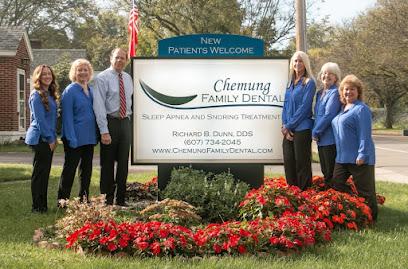


Dr. Dunn is past President of the Sixth District Dental Society of the State of New York and the Chemung County Dental Society and was the Director of The Southern Tier Implant Study Club. He is a member of the American and New York State Dental Associations, Academy of General Dentistry, Academy of Osseointegration, Academy of Digital and Computerized Dentistry, Whos Who, and the Pierre Fauchard Academy- an International Honor Dental Organization. Dr. Dunn presently serves as Chairman of the Sixth District Dental Societys Malpractice Claims Committee.
The American College of Dentists was founded in 1920 to recognize dentists who have made significant contributions to the advancement of dentistry. The mission of the American College of dentists is to promote excellence, ethics, and professionalism in dentistry. Fellowship in the College is by invitation based on demonstrated leadership and contributions to the dental profession and society. Approximately 3.5% of dentists are Fellows of the American College of Dentists. Dr. Dunn is a Diplomate of the ABDSM and is a member of the American Academy of Dental Sleep medicine (AADSM) and the American Thoracic Society(ATS).
Awards & Recognition Fellowship in the American College of Dentists on October 18, 2002, during their Annual Meeting and Convocation in New Orleans. Past President of the Sixth District Dental Society of the State of New York and the Chemung County Dental Society Director of The Southern Tier Implant Study Club Presently Chairman of the Sixth District Dental Societys Malpractice Claims Committee 2020 Top Doc from Top 100 Registry
Dr. Dunn recently completed a year-long Fellowship in Medical Competency for the Treatment of Temporomandibular Disorders and Sleep Dentistry and has lectured locally and nationally on Dental Sleep Medicine. He also co-authored an article on Sleep Medicine that was recently published in the Annals of the American Thoracic Society.


Dr. Richard B. Dunn, DDS is the only board certified Diplomate of the ABDSM (American Board of Dental Sleep Medicine) in our entire region, including Pennsylvania. In addition, he serves as a Director on the Board of the ABDSM. He has lectured locally as well as nationally in the field of Sleep Medicine and has co-authored and published in this field in Annals Of The American Thoracic Society. Dr. Dunn is presently working on another topic on the treatment of Obstructive Sleep Apnea (OSA) with OAT (Oral Appliance Therapy) for publication. He collaborates with other leaders in the field of Dental Sleep Medicine routinely. He is a member of the AADSM (American Academy of Dental Sleep Medicine) and the ATS (American Thoracic Society).
Dr. Dunn works in a Team Approach with all physicians which he feels is the only way to successfully treat and manage his sleep patients. He routinely receives patient referrals from all the Board Certified Sleep Physicians at the following hospitals: Arnot Ogden, Ira Davenport, Guthrie (New York and Pennsylvania), Cayuga Medical Associates, Schuyler and University of Rochester and refers to these specialists as well. He is most proud of his affiliation and professional relationships with the Sleep Physicians and the hospitals which will improve patient care and outcomes.
At Chemung Family Dental, Dr. Dunn and Jessica Turner, C.D.A. (who helps to oversee our Sleep Services) will provide our patients with the most advanced sleep services including appliance selection, monitoring and recall for effectiveness of treatment and education.
We accept Health Insurance and participate with Medicare (Part B) to cover your treatment. To send any information including medical records by you or your medical team, please fax to 607-734-6103 or email to [email protected]

I came to Chemung Family Dental to see Dr. Dunn to get treatment for my sleep apnea. I was not able to wear my CPAP machine due to many complications for years so Dr. Dunn made me an oral appliance to treat my sleep apnea. Since then I have been able to sleep throughout the night, I wake up feeling rested, am no longer tired or falling asleep during the day and I dont wake my wife up with loud snoring like I used to. Dr. Dunn re-tested me with an at home sleep study with my oral appliance in and my sleep apnea has improved drastically! I now feel great.
Sleep apnea is a serious sleep disorder that occurs when a persons breathing is interrupted during sleep. People with untreated sleep apnea stop breathing during sleep. Each pause in breathing, called an apnea, typically lasts from 10-20 seconds and can occur 5 to 30 times or more an hour. As a consequence, you spend more time in light sleep and less time in the deep, restorative sleep you need to be energetic, mentally sharp, and productive the next day.
Due to these apnea episodes, the brain and the rest of the body may not get enough oxygen. Sleep apnea is diagnosed with an overnight sleep test called a polysomnogram or sleep study. This may be done in a sleep disorder center or even at home. 15% 20% or more of adults in Western countries are likely to have undiagnosed obstructive sleep apnea (OSA) and therefore are candidates for treatment.There are upwards of 90 million people in the United States with undiagnosed sleep disorders. This is a serious situation and threatens overall health.Dr. Dunn works closely with all the Pulmonologists and Sleep Physicians, as well as your primary care physician.
Is the most common type. It is caused by a blockage of the airway which is caused when the soft tissue in the back of the throat collapses during sleep. This restriction of the airway increases the velocity of the airflow through the passages which produces vibration of the soft tissues and uvula or loud snoring.
Side effects of untreated sleep apnea may be poor performance in everyday activities such as school and work as well as motor vehicle accidents. This is largely due to the inability of the body to have deep restful sleep that is required for normal function as well as deprivation of oxygen to the brain and the body.
Avoid alcohol, sleeping pills and sedatives these all act to relax the muscles in the throat and interfere with breathing. It is especially important to avoid these things before bedtime. Avoid caffeine and heavy meals within two hours of going to sleep.
Avoid sleeping on your back. Instead sleep on your side or stomach. Sleeping on your back, due to the effects of gravity, allows your tongue and soft tissues to drop or move back obstructing the airway. Open your nasal passages at night by using nasal dilators, breathing strips or saline spray.
This is the most common treatment modality for moderate to severe sleep apnea. With this treatment a mask is worn over the nose and or mouth while sleeping. The mask is hooked up to a machine, the size of a kleenex box, that delivers a continuous flow of air into the nose that keeps the breathing passages open and allows for regular breathing without apnea.
Although CPAP is very effective for treating sleep apnea, many people have difficulty wearing CPAP devices which can restrict the positions they can sleep in, dry out the nasal and breathing passages or can make them feel claustrophobic. It is estimated that greater than 25% of people using CPAP have difficulty or will not wear them. Therefore another treatment method has become quite popular.
These devices are specifically designed by dentists with special expertise and training in treating sleep apnea as Dr. Dunn has been. There are many different types and designs of dental devices. They are made of acrylic and most are made to fit inside the mouth, very similar to an athletic guard.
The two most common oral devices are the mandibular repositioning appliance and the tongue retaining device. These oral devices open your airway by moving your lower jaw and tongue forward during sleep thereby improving sleep. These devices are most effective for those with mild to moderate sleep apnea.
They do have some minor side effects such as soreness and saliva build-up however we have found that the majority of our patients adapt well to them and are an excellent alternative for those that cannot or will not wear CPAP devices.
They are also effective at reducing the harmful effects of sleep apnea as has been demonstrated by studies with patients wearing these appliances for sleep studies. These devices do need to be periodically checked and adjusted by the dentist. Often the fees for this service will be covered by medical insurance.

Do you snore so loud that you keep your family up at night? Do you have problems concentrating and staying focused at work or school or are you tired no matter how long you sleep for? If you sit down during the day do you doze off right away?

