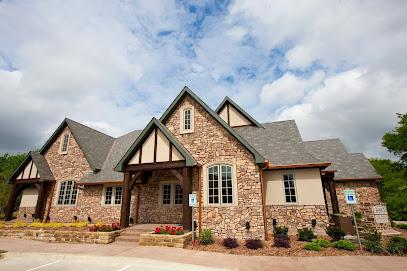


CEREC technology has reinvented the dental restoration process. Prior to this technology, patients would need at least two visits to complete a restoration process, and there was often a couple of weeks of discomfort in between visits. At Campbell Crossing Dentistry in Garland, TX, our dentists can design, create and place your restorations in a single visit, all thanks to our CEREC technology.
Our dentists and dental team work hard to stay current on the latest advances in dental technology and techniques. We utilize state-of-the-art dental technology, including CEREC one-visit restorations, to help us provide you with the best possible dental care and experience. CEREC technology allows our team to provide you with a custom-made, high-quality dental restoration in a single visit to our office. Traditional dental technology required at least two visits to complete a dental restoration; CEREC technology saves you time and discomfort by eliminating the need for a second visit. With CEREC technology, we can create the following types of dental restorations in just one visit:
Digital X-rays are one of the advanced diagnostic tools we use to provide you with the best possible care. Digital radiography has changed the way we take dental X-rays by making the process faster, more comfortable, and more convenient than ever before. Digital X-rays use a digital sensor to take images of your teeth, unlike traditional X-rays that use film. Digital X-rays use significantly less radiation than conventional film X-rays, and they require the use of no chemicals for developing the images. Our dentists can then instantly view the high-quality images on monitors right in the treatment room to provide you with efficient, accurate diagnoses and care. Our team is able to use digital radiography to identify and diagnose several types of dental problems, such as:
As with the many other dental technologies in our office, we use the iTero digital scanning system to provide a positive experience for those who visit Campbell Crossing Dentistry. With the iTero technology, Drs. Reed, and Schwalm along with our dental team, can perform digital impressions, which is a much more desirable and enjoyable method than traditional impression trays.
Digital impressions are a modern, efficient, and comfortable way to take precise impressions of your mouth. If you have ever had to have a traditional impression or mold taken when you have visited the dentists in the past, you know that they can be unpleasant and uncomfortable. We are pleased to utilize digital impressions to eliminate the need for messy, goopy impressions. While this technology can make the experience more comfortable for any patient, it is especially good for patients who gag easily. The digital impression system is less invasive than traditional impressions and molds, and it provides our team with extremely accurate impressions.
The intraoral camera is connected to a computing unit at the side of the dental chair. A pen-sized wand is inserted into the mouth, and a movie of the inner mouth is created. This movie can be magnified more than 30x to allow every aspect of the teeth to be viewed in full color. The intraoral camera is an incredibly valuable tool, which brings dentistry to life.
The intraoral camera is the size and shape of a pen. It is covered with a disposable sheath, to ensure that no germs are transmitted from patient-to-patient. The slim wand is inserted into the mouth and rotated until clear pictures of every tooth can be recorded. The images are transmitted onto a television screen in movie format. The movie can be paused, and images of individual teeth can be magnified to allow the dentist to explain and explore any noticeable problems. One of the biggest advantages of the intraoral camera is tit does not expose patients to radiation. The intraoral camera is one of the most useful and versatile diagnostic tools available.
Although digital X-rays are a common component of many dental offices, we utilize a unique type of digital X-ray: the NOMAD Portable X-ray. It is designed to reduce radiation exposure and increase safety for both our patients at staff. Drs. Reed, and Schwalm feel confident in our choice to use this dental technology in our practice.
In addition to providing a safer X-ray treatment, the NOMAD portable X-ray allows you, our patients, to remain comfortably seated in the treatment room while our team stays chairside. The imaging process uses lightweight, handheld equipment and creates a more efficient and convenient experience.
The images taken with The NOMAD X-ray are compatible with both traditional X-ray film as well as digitalized display methods. This means that viewing your dental X-rays is more streamlined. Without leaving the operatory, we can capture any needed X-ray images, upload them to our computer system, and explain your oral structure and condition. If this diagnosis process sounds timely and informative, thats because it is.
We use telescopic loupes, to increase the visibility and precision of our dentists examinations. The added clarity ensures that our dentist can provide the most accurate care to our patients at Campbell Crossing Dentistry.
Surgical microscopes, also known as telescopic loupes, enhance our vision during dental examinations and procedures so that we can detect the small details of your teeth and mouth that might otherwise go unnoticed and provide an appropriate treatment.
Surgical microscopes are binocular-like devices, and are worn like glasses. While they may look funny, they allow our dentists to maintain a comfortable position during your treatment and devote more focus to your oral health needs. The microscopes magnify and illuminate your mouth so that we can see clearly the fine details of your smile and pinpoint the exact location of any dental concerns. Many microscopes offer several levels of magnification so that we can view your smile as closely as we need.
Dr. Thomas A. Reed was born in Duncan, Oklahoma and later moved to Garland, Texas. He attended and graduated with honors from Stephen F. Austin State University in 1982. He then graduated with honors from Baylor College of Dentistry in 1986 and began practicing general dentistry in Garland. Dr. Reed was awarded his Fellowship in the Academy of General Dentistry in 2005. He has been a member of the American Dental Association, Texas Dental Association, and has served a three-year term on the Peer Review Committee of the Dallas County Dental Society. He currently serves on the Board of Directors of the Dallas County Dental Society and the Dallas Academy of General Dentistry and was nominated by the Dallas AGD as Texas Dentist of the year.
Having a long-standing desire to give back to the community that has supported him, he was elected to the G.I.S.D. Board of Trustees in 1991. He served in that capacity for 21 years and served three years as president, three years as secretary and assistant secretary. He chaired the Facilities Committee for several years, served a 24-year membership in the Garland Rotary Club where he acted as club president, served on the Garland YMCA Board, and as the Capital Campaign Co-Chairman.
Dr. Reed enjoys spending time with his wife, Shelley, and their family and friends, especially at Lake Cypress Springs. He also enjoys water sports, restoring cars, boating, fishing, and most anything outdoors.
Dr. Fred Thompson has been providing quality dental care throughout the Dallas, TX area since 1980. In 1979, Dr. Thompson graduated from the Baylor College of Dentistry. He has extensive experience in oral surgery, cosmetic procedures, full-mouth reconstruction, and implant dentistry. Dr. Thompson is board certified by the American Board of Oral Implantology and is a fellow of the American Academy of Implant Dentistry.
Dr. Thompson has provided quality service for the last 35 years and continues to do so in his office. He is the dental implant specialist and has implanted more than 6,500 dental implants in his office.