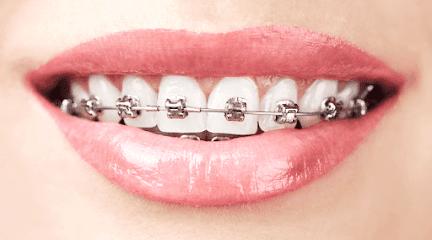


Dr. Nguyen is an amazing orthodontist. For the past two years, I have been visiting Braces Las Vegas for my orthodontic treatments and I finally got my braces off last week and the results are just amazing! My teeth have never been this straight and now I can smile in confidence.

Orthodontics is a specialty field of dentistry that focuses on the development, prevention, and correction of problems with teeth, bite, and jaws. Dr. Kate Nguyen is a licensed orthodontist, ensuring that you will see results and receive the best in orthodontic care at Braces Las Vegas.
It takes several years to become anorthodontist. They typically need to spend 2-4 years in an undergraduate program. They have to pass the Dental Admission Test (DAT), then they spend four years in dental school where they earn a Doctor of Dental Surgery (D.D.S.) or a Doctor of Dental Medicine (D.M.D.) degree. Dr. Nguyen received her undergraduate degree, a BS in Biological Sciences from the University of California, Irvine, and her doctorate, a DDS, MS from the University of the Pacific, Arthur A. Dugoni School of Dentistry, San Francisco.
After completing a dental program, they apply to orthodontic specialty programs, which last three years. They will learn about orthodontics (tooth movement), surgical orthodontics and dentofacial orthopedics (guidance of facial development). Upon completion of that program, they are qualified as a dental specialist in orthodontics. To practice orthodontics, they must earn a license, which is regulated by the state. They need to complete a postgraduate education program and may be required to take an additional state examination.
Once they are in practice, orthodontists use orthodontic devices to straighten teeth, correct irregular bites, close gaps between teeth as well as bring teeth and lips into alignment. Orthodontists also can help with cosmetic and implant dentistry. For people with crowding, overbites or other types of bite problems, orthodontic procedures can help improve appearance and build self-confidence.
Braces are the most common orthodontic devices. Braces use continuous pressure to move teeth in a specific direction. Braces are usually worn for one to three years, depending on how severe your problem is. In addition to braces, orthodontists sometimes use functional appliances to direct the growth of the jaw in young children. Dr. Nguyen is also a certifiedInvisalignprovider, giving you more options for your orthodontic treatment.
Orthodontic problems that Dr. Nguyen can help improve include misaligned, crooked, or crowed teeth, missing teeth, extra teeth, overbite, under bite, open bite, misaligned or incorrect jaw position or disorder of the jaw joint. If you think that you may have one of these problems, there is no reason for you to suffer in silence.
Orthodontic treatment can be started at any age. Many orthodontic problems are easier to correct if detected at an early age before jaw growth has slowed. Early treatment may mean that a patient can avoid surgery and more serious complications. The American Association of Orthodontists recommends that every child first visit an orthodontist by age 7 or earlier if a problem is detected by parents, the family dentist, or the child's physician.
Phase I, or early interceptive treatment, is limited orthodontic treatment (i.e. expander or partial braces) before all of the permanent teeth have erupted. Such treatment can occur between the ages of six and ten. This treatment is sometimes recommended to make more space for developing teeth, correction of crossbites, overbites, and underbites, or harmful oral habits. Phase II treatment is also called comprehensive treatment because it involves full braces when all of the permanent teeth have erupted, usually between the ages of eleven and thirteen.
Braces use steady gentle pressure to gradually move teeth into their proper positions. The brackets that are placed on your teeth and the archwire that connects them are the main components. When the archwire is placed into the brackets, it tries to return to its original shape. As it does so, it applies pressure to move your teeth to their new, more ideal positions.
The placement of bands and brackets on your teeth does not hurt. Once your braces are placed and connected with the archwires you may feel some soreness of your teeth for one to four days. Your lips and cheeks may need one to two weeks to get used to the braces on your teeth.
No. It is recommended, however, that patients protect their smiles by wearing a mouthguard when participating in any sporting activity. Mouthguards are inexpensive, comfortable, and come in a variety of colors and patterns.
Unfortunately, they do not. In fact, most cases show that they can get worse over time if left untreated. When the permanent molars fully grow in, they leave less room for the front teeth to grow in straight, which means they can overlap further.
The first orthodontic screening should happen at age seven. At this point, the molars and a few permanent teeth should have grown in, which allows the orthodontist to accurately evaluate the future development of a childs teeth.
Those being treated with braces have to be careful with what they eat. Ice, hard candies, raw vegetables, and sticky foods can damage braces and should be avoided. Invisalign aligners can and should be removed when eating, which means those being treated with Invisalign are free to eat whatever they would like. That doesnt mean you shouldnt avoid eating too much candy, however. Losing a tooth to cavities can interrupt or ruin an orthodontic treatment plan.