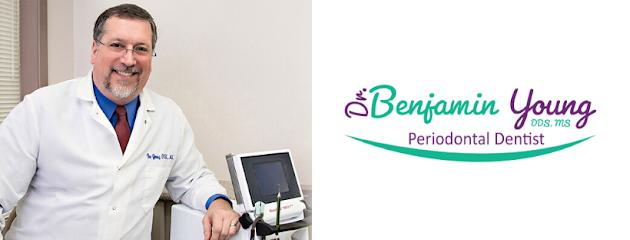


In 1988 I became an official periodontist having graduated from the residency program here in San Antonio while still on active duty. My first assignment as a periodontist was Sheppard AFB, Wichita Falls, Texas practicing and teaching in an Advanced Education in General Dentistry (AEGD) program for newly graduated dental students. This was like the one I attended my first year following Dental School graduation. In 1993 I returned here to San Antonio to become a part of the Air Force Periodontics Residency Program at Wilford Hall and also to direct the Air Force equivalent to a dental hygiene school.
In 1995 I was given the opportunity to retire at fifteen years active duty at the rank of Lieutenant Colonel to make room for younger captains to join the ranks. It was a family decision to remain here in San Antonio so my two daughters could graduate from high school without having to move one more time for dads career. As it turned out they both married their high school sweethearts and I now have two adult sons, two happy daughters and seven grandchildren out of the deal. I stayed one more year on active duty and retired in 1996. This gave me time to begin to figure out how to enter the world of private practice. My practice began in early 1997 and at the same time I worked part time as an associate clinical professor at the dental school.
Around 2007 I changed careers to help launch a new technology company by the name of Voxelogix known for the NeXsmileprocedure. In 2008 we were hit by a huge recession and the investment capital necessary to grow the company dried up. Voxelogix ironically won a prestigiousFrost and Sullivanaward for innovation in the field of Oral Surgery just before goingbankrupt having been unable to obtain the needed capital to continue to grow. But all was not lost. From this experience I now practice completely differently using advanced technologies I helped to develop in Voxelogix. This includes the placement of dental implants using 3D printedsurgical guides designed from a patients unique CT scan data.
Around 2011 I was starting back for the second time into private practice. Interestingly, a lot had changed since 1996. Many of the conventional methods of associating with other dentists no longer seemed to work as well thanks to the massive technology changes that fueled the growth and relevance of social media. What has not kept up with change as well has been dental insurance. Out of all of these personal and social changes over the last decade I have reimagined my own practice of periodontics and written a how-to-floss book,The Joy of Flossing. You can listen to it for free or buy it on Amazon as either a soft bound book or Kindle download. In 2015 I embarked on laser training. This over one-hundred-twenty-thousand-dollar investment in education and equipment now enables me to treat active periodontitis in less time, with less postoperative discomfort and less cost compared with conventional surgical techniques.
To sum up. I am an inquisitive guy who is fascinated by the specialty I practice. I also love dentistry, medicine, science, and the humanities, and talk and write about all of it. The reason I do is because I believe patients need more than technical procedures. They can benefit from good information and encouragement from people they choose to get to know more than just superficially.
Periodontal disease (from periaround andodonttooth), which is also called gum disease , is a continuous and progressive inflammation of the gums caused by bacterial infection in the gum and bone tissue surrounding your teeth. As the bacterial infection and inflammation increase, the gums detach from the teeth and the surrounding bone is eaten away. If the infection is allowed to progress for too long, your teeth become loose and can eventually be lost.

Bacteria accumulate on your teeth and below your gum line from food and other sources. If these bacteria are not adequately removed with brushing and flossing, they form a sticky biofilm on your teeth known asplaque. As the plaque builds up, large deposits start to harden into what is calledcalculus, ortartar.
The bacteria in the plaque and tartar give off toxins that start inflammation that results in the detachment of the gums from the teeth. The surrounding bone starts to be eaten away as well. As the bacterial infection progresses in size and severity, the gum detachment and bone loss becomes more advanced and the teeth eventually become loose and can be lost.
The first level of periodontal disease is known asgingivitis.Gingivitis is a bacterial infection of the gums only (not the bone) and is characterized by inflamed, swollen and red gums that may bleed when you brush or floss. The gums have not started to detach at this stage. This level of infection can usually be eliminated with thorough professional cleaning and effective home oral care.
The second level of periodontal disease, called periodontitis, is more severe and progresses in stages. At this point the bacterial deposits have not only continued to accumulate, they have started to cause the gums to detach from the teeth and the surrounding bone to be progressively eaten away.
As the gums detach, pockets of space form between the gums and the teeth, allowing more bacteria to be trapped and cause further inflammation. The gum pockets will become progressively deeper as the infection progresses.
As gum pockets become deeper, the types of bacteria that populate these pockets change and are more destructive the deeper the pockets become. This causes the deterioration and bone loss to accelerate in speed and intensity as periodontitis advances

Periodontitis progresses from mild to moderate to advanced. Dr. Young assesses the level of periodontal disease by gently measuring the gum pocket depths using a small probe and by examining the amount of bone loss in X-ray images.
The gum pockets are 6mm and deeper. Now the gum detachment and bone loss are extensive and the type of bacteria colonizing the pocket are shifting to more aggressive and medically risky bacteria.When gum detachment and bone loss have become this severe, the tooth is in danger of being lost. Teeth often become loose at this point, which may be the first clue someone may have that there is something wrong.
Although the bacterial infection and its resultant irritation of the gums are the most immediate visible cause of periodontal disease, there are numerous contributing factors that cause the infection to take hold much faster and progress at greater speed:
The human body functions as an integrated whole. A diseased condition in one part of your body can affectother parts of your body and cause damage in areas far removed from the original point of trouble.