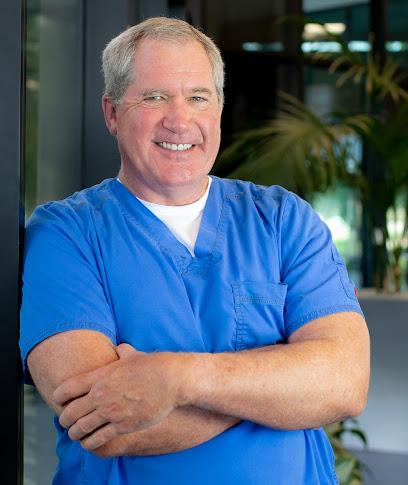


Dr. Barry Heaton is a sought-after, Board Certified Houston Periodontist and Houston Dental Implant Surgeon. Dr. Heaton is well known for his gentle manner, excellent standard of care, patient education and compassion for his patients. He has been in practice in Houston, Texas since 1985 and was the first periodontist to place dental implants in Houston. Over the course of his extensive career, Dr. Heaton has placed over 6000 dental implants.
Dr. Heaton has contributed to the professional dental journals for the Texas Dental Association and the Greater Houston Dental Society and is a published author of numerous studies on the connections between periodontal disease, gum disease, diabetes and cardiovascular disease.
Dr. Heaton invests heavily in advanced training and advanced technology to stay ahead of changes in the dental implant and periodontics field. Periodontics and dental implants have advanced more than any other discipline in dentistry.


One of the biggest advancements is our use of computerized tomography or CT scans. CT scans allow us to see a three dimensional view of where a dental implant will be placed. With a CT scan, we can measure to the fraction of a millimeter.
Our PiezoSurgery equipment allows Dr. Heaton to utilize controlled, sophisticated ultrasounic microvibrations in the practice of Implantology and Periodontology. The device allows micrometric bone procedures with maximum surgical precision and intra-operative sensitivity. It also provides precision work with minimal irritation to soft tissue, and maximum safety. This advanced technology also provides a histological advantage with more favorable bone healing in the osseointegration process.

Different types of sedation methods are used depending on the type and length or treatment. Oral local anesthetics (numbing agents) are used to eliminate pain. When oral sedation medication is used, it is taken once prior to the dental procedure and again right before the actual procedure. Nitrous oxide, or laughing gas, can also be administered to further create a state of relaxation. Full sedation or I.V. procedures are done under the direction of a licensed anesthesiologist.
Nitrous Oxide (laughing gas or N2O) makes the patient feel more relaxed. The gas is administered in the office with a small comfortable mask placed over the patients nose. After the procedure, the patient is given oxygen that reverses the effects of the nitrous oxide. Unlike oral sedation and I.V. sedation, the patient is able to drive themselves home. With oral sedation medications and/or I.V sedation, you will need to bring a friend, spouse or family member with you to drive you home as you may be drowsy while the medications wear off.
