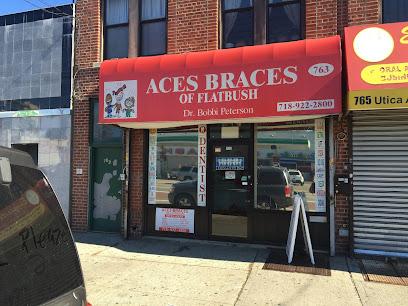


Unhappy with the way your smile lines up? With dental braces, you do not have to be. Straight teeth not only enhance your smile but also contribute to optimum oral health and may even relieve jaw pain. Our team can help you on your way to smiling more confidently and more often.
Dental braces can give patients more than just a straight and beautiful smile. Properly aligned teeth are crucial to oral health. Braces can fix crooked or crowded teeth that are difficult to brush or floss around. Braces can also help correct an improperly aligned jaw relieving a host of issues, including pain, biting one's tongue or cheeks, speech issues, and chewing problems. If a patient suffers from TMJ pain, braces may provide relief.
The need for orthodontic treatment is so widespread, giving patients multiple types of braces to choose. Those who wish to avoid metal braces can choose clear or lingual braces (braces that go behind the teeth) as an option. Our team is happy to discuss the types of dental braces we offer and determine which is the best fit for the patient.
The American Association of Orthodontists advises that patients have a dental cleaning and checkup before getting braces. Patients should ask the orthodontist and dentist if there is any dental work they need to complete beforehand. A patient may need spacers placed between their back molars about a week before placement of the brackets and wires. It is important to maintain excellent oral health in the time leading up to the start of treatment as well as during treatment.
Though braces are most associated with teenagers, they are gaining in popularity among adults. Even the number of adults over the age of 50 getting braces is on the rise as imperfections in bite and the alignment of teeth tend to become worse with age. As long as a patients teeth and gums are healthy, they can enjoy the benefits of dental braces at any age.
It is recommended that children have an orthodontic evaluation around the age of 7. If dental braces are needed, the earlier treatment begins the better as there will be more treatment options available. Also, because children and teen's jaws are still growing, early intervention can prevent the need for more involved corrective procedures in the future.
A common worry for parents is how dental braces will affect their children playing sports or engaging in other physical activities. Low contact activities such as running, swimming, or dancing is perfectly safe at all stages of orthodontic treatment. However, children and teens involved in higher contact sports and sports involving a ball are advised to wear a mouthguard. In fact, there are special mouthguards designed specifically for braces.
As with any form of treatment, dental braces carry some risk, but they are usually minor especially compared with the benefits of a straighter smile. Braces take some initial getting used to and may impact a persons speech or how they chew. Any discomfort caused by the brackets or wire rubbing up against the cheek can usually be remedied by dental wax. Keeping up with daily brushing and flossing will reduce the risk of problems caused by food particles or plaque getting trapped in and around the teeth and braces. Our team provides a thorough explanation of any risks involved and how patients can lessen those risks.
In addition to keeping a strict hygiene routine, there are certain foods it is wise to avoid while wearing braces. For the most part, patients may eat the foods they normally do. However, they need to eat these foods in a way that will not impact the braces. For example, instead of biting into a whole apple, cut it down into smaller slices. Steer clear of hard or sticky foods as they may more easily damage the brackets or wires. Most people find that any lifestyle changes they need to make during treatment do not interfere significantly with day-to-day life.
Patients look forward to the day the braces come off and they can enjoy their new smile. However, the day the braces come off is not the end of treatment. Teeth are always on the move. Once braces have been removed, teeth begin to shift back to their original position. For this reason, orthodontists recommend the patient wear a retainer for at least 12 months after the removal of braces. Because teeth shift throughout a persons life, some orthodontists recommend wearing the retainer longer.
A. There is no 'right' age to get braces. It is recommended orthodontic treatment starts in early teens and late childhood when most of the adult teeth are in, but the jaw is still growing. However, more and more adults, even those over 50, are enjoying the benefits of dental braces.
A. A daily oral cleaning routine becomes even more essential during treatment with dental braces. Flossing can be challenging, and dentists recommend you use an interdental brush or a floss threader to clean between teeth. A water flosser may also be useful in cleaning around the brackets and wires and other hard-to-reach places.
A. There may be some initial discomfort when braces are first put on and after they are adjusted. Most people find the discomfort to be minimal. Some find the wire and brackets irritate or scratch against the inside of the mouth. This issue usually goes away and can be easily remedied with orthodontic wax.
A. The average treatment time with traditional braces ranges between 18 to 24 months. Problems that are more difficult to correct may take up to three years. Less severe issues can take as little as six months to correct. The length of time someone needs to wear braces depends on their unique situation.
A. Braces do not cause stains on teeth but plaque that builds up in hard-to-reach areas can cause discoloration. For this reason, a strict brushing and flossing routine is essential. You may want to avoid drinking staining beverages such as soda or coffee while wearing braces. The good news is, if discoloration occurs, there are cosmetic procedures available to remedy it.
There are so many differences between traditional braces and Invisalign aligners. You may be wondering which option is right for your alignment needs and if you will have to change your lifestyle. Many people choose to go through the Invisalign process because the trays are less conspicuous than traditional braces. Traditional braces can be very
One factor you may consider when deciding between Invisalign and braces is the potential for mouth pain and cuts. You may have a lot of concern about discomfort when correcting the alignment of your teeth. Not only can there be discomfort from moving the teeth into place, but also the corrective device can rub the
A current fashion trend is teeth jewelry. Given its popularity, you may have considered acquiring it for yourself. But first, you need to know about the many examples of dental jewelry. In this article, we go over teeth jewels, tooth rhinestones, and dental tattoos.A tooth gem is essentially a gem, a rhinestone, or a crystal

Clear orthodontic aligners have been growing in popularity for many years. One of the most recognizable brands is Invisalign. Invisalign is a form of orthodontics that uses clear tray aligners to straighten the teeth instead of the traditional mouthful of metal wires and brackets.
Invisalign uses clear tray aligners instead of metal wires and brackets to straighten teeth. The aligners are constructed of a solid piece of plastic strong enough to shift the teeth and move them into the correct position. Every one or two weeks, the patient receives a new tray with an updated aligner. Each tray will feel slightly different as it shifts and moves the teeth.
The idea of using removable aligners to adjust the teeth is not a new concept. The idea was first introduced in the 1940s. Additional improvements were made through the decades, though the technology did not improve until the 1990s. The creators of Invisalign developed their mass-market system in 1999.
Once the aligners have been made, our staff will make sure they fit well, answer any questions, and go over the treatment plan. Patients will be expected to wear the aligners for 20 to 22 hours a day to get results. Regular checkups with {{DOCTOR}} will make sure treatment stays on track. Our staff will determine how often new aligners are needed.
After the desired results have been achieved, the patient may be expected to wear a retainer to maintain those results. This will prevent teeth from gradually shifting back to their initial position. Our doctor will provide specific instructions on how often a retainer will need to be worn.
Thanks to the fact that they are next-to-invisible, both teens and adults can avoid the discomfort and self-consciousness of traditional metal braces. Many patients also appreciate that they can take Invisalign aligners out to eat, brush and floss, or for social situations. Still, Invisalign is not without its pros and cons.
However, since they are removable, they are more likely to be lost or broken. Patients also need to be careful about what they drink when their aligners are in. Anything but water should be avoided. Liquids can seep into the plastic and stay there until the aligner is removed. This can lead to staining of the aligner and even tooth decay.
It is essential to use and care for Invisalign aligners appropriately to have a good orthodontic outcome. For Invisalign to work, the aligners have to be worn for the recommended number of hours a day. Patients should try to limit the number of times they remove the aligners since it will not take long to exceed the time they can be left off.
Patients should always rinse the aligners when they are removed. Bacteria and plaque can easily attach to them, which can cause an unpleasant odor and sticky feeling on the teeth. Aligners should be cleaned with a clear and unscented antibacterial soap. If patients use toothpaste to clean the aligners, they should make sure that it is not a brand with whitening agents, as these can wear away the plastic.
Proper oral hygiene is essential at any time, but it is a bit easier when using Invisalign versus traditional braces. Food and plaque can get trapped in conventional braces' metal brackets and can be tough to brush. Since Invisalign aligners can be removed, it is simple to brush and floss and replace the aligners when finished.
Only an orthodontist can reasonably predict the length of the Invisalign treatment time. The severity of the condition, how well the patient adheres to the treatment plan, and age are all factors. On average, it takes less than two years to see results. The treatment time for teens is typically a little shorter than for adults.
Following all the recommended guidelines will ensure patients do not extend the treatment time. Patients need to switch trays on schedule and talk to our staff if there are any concerns. If the aligners are not worn for the recommended time, the teeth may start to shift back to their original positions.
A. Invisalign is an orthodontic technique that uses clear, plastic aligners to straighten the teeth. The aligners are created from a custom mold of the patients mouth, and new aligner trays are provided at specific intervals as part of the treatment process. Aces Braces will develop the treatment plan and monitor the process.
A. Since Invisalign aligners are clear, patients can avoid the unsightly look of a mouth filled with metal brackets and wires. They are also more comfortable to wear and allow the patient fewer restrictions on foods they can eat. Since they are removable, it is easier to brush and floss your teeth.
A. Treatment, on average, takes less than two years but can vary depending on the patients specific concerns. Aligners must be worn for 20-22 hours a day to see results. If a patient does not wear the aligners for the recommended amount of time, treatment results will take longer.
A. Unlike traditional metal braces, Invisaligns clear aligners do not rub and poke at the soft tissues of the mouth. Patients can expect to feel some sensitivity for a day or two when a new set of aligners are put in. This means the teeth are shifting, and the aligners are working. Any discomfort should go away quickly.
A. Aligners should be cleaned with a clear and unscented antibacterial soap or toothpaste. If using toothpaste, make sure it is not a brand with whitening agents, which can wear away the plastic. Always brush and floss after meals before putting the aligners back in the mouth. This helps keep food particles from getting stuck, which can lead to bacteria growth and bad breath.
A. You must remove the aligners before eating. You will also want to avoid drinking anything other than water when the aligners are in place. Coffee and tea can stain the aligners, while soda has acidic properties that can break down the plastic.
By visiting us as soon as possible, our team can help get you the professional treatment you need. Instead of waiting around and allowing the symptoms to get worse, we can provide you with treatment options.